United Arab Emirates area guides for Abu Dhabi, Dubai, Sharjah, Ajman, RAK, Fujairah, and UAQ with property, schools, healthcare, lifestyle, transport, and key destinations.

The United Arab Emirates (UAE) has seven emirates: Abu Dhabi, Dubai, Sharjah, Ajman, Ras Al Khaimah, Fujairah, and Umm Al Quwain. This guide gives you useful information about property, living costs, schools, healthcare, transport, lifestyle, and property investment in all emirates.
The United Arab Emirates has seven emirates, and each one feels different and has its own reasons for people to live there. Dubai is the most recognised emirate in the UAE and a major business and tourism hub.

But Abu Dhabi, Sharjah, R-A-K, Ajman, Fujairah, and U-A-Q each carry something different. Together, they form a country where someone from practically anywhere in the world can find a neighbourhood that starts to feel familiar quite quickly.
This guide covers everything you need to think through before deciding to buy, invest, or rent, from UAE property market conditions and cost of living to schools, hospitals, lifestyle, and transport. Nothing is inflated here. The idea is simply to lay it all out and let you decide what matters.
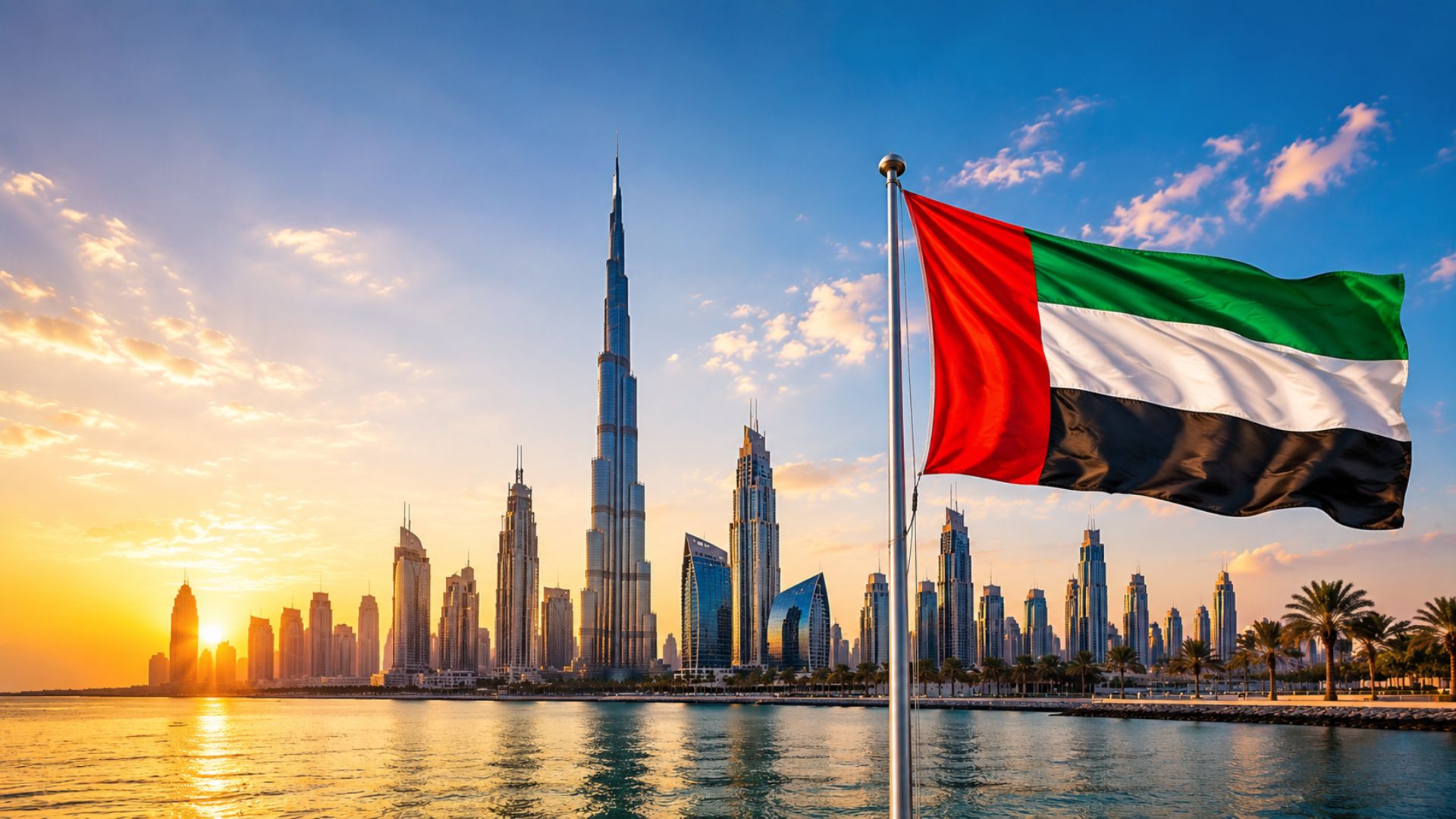
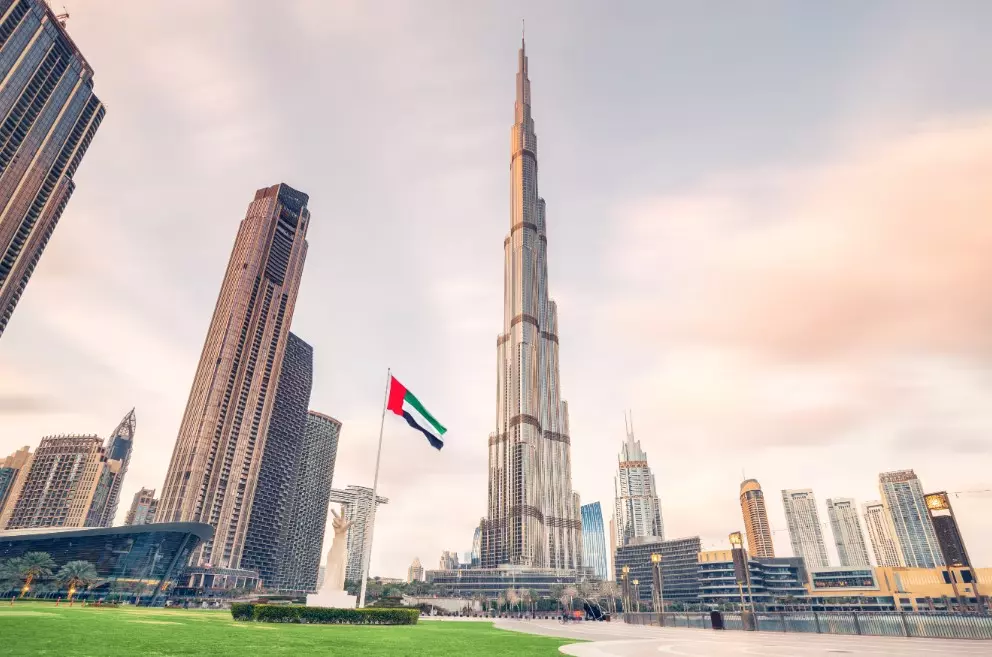
Living in Dubai means being in a city that seems permanently mid-construction, always a new tower somewhere, always a new community taking shape. The infrastructure is well ahead of most comparable cities globally.
The metro (driverless, air-conditioned, two lines) carries over 2.18 million riders daily. The tram covers the Marina corridor. Buses, taxis, Uber, and Careem fill in the gaps. The Nol Card works across all public transport modes in Dubai.
Best Places to Live in Dubai for urban professionals usually start in Dubai, Dubai Marina, Downtown Dubai, Business Bay, DIFC, or JBR. These are expensive. Mid-range communities like JVC, Al Barsha, and Discovery Gardens are more accessible. For families with children, Arabian Ranches, Dubai Hills, and Motor City tend to come up most often.
Shopping is centered around major malls, Dubai Mall, Mall of the Emirates, City Walk, and newer additions like Nad Al Sheba Mall (opened April 2025). Dining ranges from Dhs 20 at a neighbourhood shawarma counter to several hundred dirhams at a licensed hotel restaurant. Both are common, sometimes on the same evening.
Kite Beach and JBR Beach are the most popular public stretches. Al Qudra for cycling. Zabeel Park for open space. Hatta, about 90 minutes from central Dubai, near the Oman border, offers mountains, a wadi hub, mountain biking, and what has become one of the more interesting weekend options in the region.
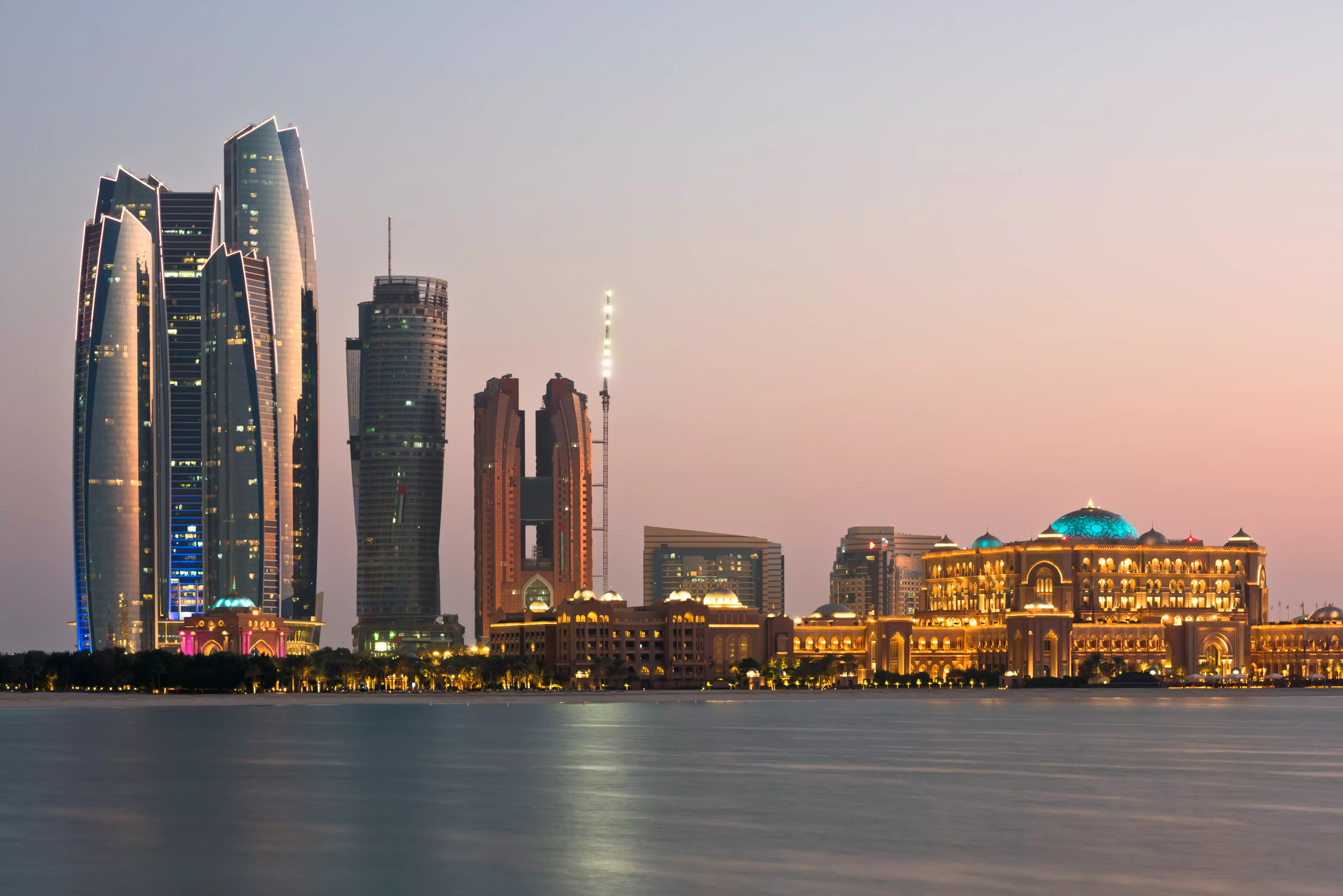
The capital moves differently. It is less dense, more deliberate. There is a Corniche area that works better for evening walks than almost anything in Dubai. Saadiyat Island has the Louvre Abu Dhabi, the Mangrove National Park nearby, and a beach that does not feel crowded. Yas Island has Ferrari World, Yas Waterworld, and a mall that anchors one of the better family-oriented communities in the country.

Living in Abu Dhabi suits those people who want a city that functions well without the constant noise of Dubai's pace. The public transport system lacks a metro; the bus network is functional, but a car is generally more practical, and the urban layout is more dispersed than in Dubai. The Galleria on Al Maryah Island is a place for luxury shopping and fine dining.
Some of the main hospitals in Abu Dhabi are Cleveland Clinic Abu Dhabi, Sheikh Khalifa Medical City, and Sheikh Shakhbout Medical City. The standard is high, and mandatory health insurance covers employees and, in most cases, their families.
Sharjah is Dubai's neighbor and, in some ways, its counterweight. It is more affordable, more conservative, and more family-focused in a traditional sense. The Blue Souk, its distinctive blue-tiled market, is one of the characterful shopping spaces in the UAE.
In Sharjah, you can find jewellery, textiles, and local crafts in traditional markets. Souq Al Jubail is popular for fresh seafood and produce, while City Centre Sharjah holds everyday shopping and entertainment.
Commuting to Dubai is a reality for most Sharjah residents, and that commute, especially on the Emirates Road or the main Dubai–Sharjah road, can be long during peak hours. It is a genuine trade-off rather than a minor inconvenience. Many people manage it comfortably enough over time. Others eventually decide the savings are not worth the daily hour each way.
Ras Al Khaimah is becoming more popular with buyers who are looking for waterfront homes and more affordable property prices. Al Marjan Island and Mina Al Arab are the main residential and hospitality concentrations, both on the water and at a significantly lower density than Dubai or Abu Dhabi.
The Anantara Mina Al Arab resort and the Ritz-Carlton Al Wadi Desert represent the hospitality end of the market, both well-regarded and different in character from the big Dubai properties.
Investment interest in Ras Al Khaimah has increased, partly driven by the integrated resort project on Al Marjan Island. How that changes the demand picture is still unfolding.
Ajman is small, affordable, and sits directly on Sharjah's northern border. Ajman Corniche is the main public waterfront stretch, and on weekday mornings, it is quite pleasant. Al Nuaimiya is the primary residential area.
For anyone employed in Dubai or Sharjah who wants the lowest possible housing cost and does not mind the commute, Ajman makes practical sense. It is not glamorous, and it does not try to be. The investment market exists but is thin, and exit liquidity is something to think carefully about.
Fujairah sits on the east coast facing the Gulf of Oman, which immediately sets it apart from every other emirate. The geography is different, greener in winter, and cooler in summer than the West Coast, with the Hajar Mountains rising behind the coastal strip.

It is quieter than any of the western emirates and draws a mix of residents who work in the East Coast industrial and port sectors, retirees, and people who prefer a slower pace. Snorkelling and diving off the coast are good. It is not well-connected to Dubai by public transport, and that limits its appeal for anyone dependent on the Dubai job market.
Umm Al Quwain is the least developed of the seven emirates and has a quiet, low-key feel. Siniya Island offers new development with natural surroundings and more privacy. It is not ideal for people working in Dubai, but it can be interesting for early investment or a second home.
Living in the UAE means different things to different people. For some, it is a career move. For others, it is the climate, the safety, or the sheer variety of life you can build here. The country draws over 200 nationalities, and the infrastructure, roads, hospitals, malls, and schools have largely been built to accommodate that mix.
The work week runs Sunday to Thursday across most of the country. The summers are difficult, temperatures climb above 40°C from May through September, and the humidity on the coast adds to it. Life moves indoors during those months.
The UAE has cooler, comfortable weather from October to April, which is great for outdoor activities, tourism, and family time. Alcohol is permitted in licensed venues in most emirates, with Sharjah being the exception.
Around 90% of the UAE's population is expatriate. That number shapes everything: the food available, the schools on offer, the communities that have been built, and the general social atmosphere. It also means the UAE lifestyle is multicultural, not just cosmetically so.
Your neighbors might be from the Philippines, India, the UK, Egypt, or Nigeria, and there are community spaces, restaurants, and institutions designed around all of them.
The UAE consistently ranks among the safest countries in the world. Roads are well-maintained. Utilities work reliably. Clean water access is 100% urban and near-universal. These things seem basic, but they matter in a real way to daily life, especially for families relocating with children.
The Golden Visa program allows long-term residency of up to 10 years and is available to property investors meeting specific thresholds, skilled professionals, entrepreneurs, and outstanding students. It has changed the calculus for a lot of people who previously saw the UAE as a temporary posting rather than somewhere to settle.
Over the past few years, the UAE real estate business has grown a lot. This is due to more people moving to the country, changes in the government, and more foreign investment. In just five emirates in the first quarter of 2025, real estate deals worth AED 239 billion took place, showing that the market is still growing strongly.
Apartments are the most common entry point and the most liquid format. They sit in multi-storey buildings and range from studios to four-bedroom units, from high-rise waterfront towers to mid-rise community buildings inland.
They tend to produce the most consistent rental income, particularly in Business Bay, Dubai Marina, and Al Reem Island in Abu Dhabi.
Villas are detached, usually within gated communities. Arabian Ranches, Palm Jumeirah, and Emirates Living in Dubai are the well-known clusters. In Abu Dhabi, Khalifa City and Saadiyat Island carry a villa offering that appeals to families who need space. They are generally less liquid than apartments but tend to attract longer tenancies.
Townhouses are between the two, attached or semi-detached, often within master-planned communities near parks or retail. JVC, Al Furjan, and Jumeirah Village Triangle in Dubai; Khalifa City bordering Abu Dhabi's residential areas. These are for families who want a garden but can not yet stretch to a full villa.
Golf course communities are their own category and a slightly niche one. Communities built around championship courses, like Dubai Hills Estate and Al Hamra Village in Ras Al Khaimah, attract specific buyers and deliver consistent rental income from a particular profile of tenant.
Off-plan properties are purchased before construction is complete. Buyers should review the developer's track record, project approvals, payment plans, and registration status before committing directly to the developers.
The entry cost is often lower, and payment plans can stretch across several years. The main trade-off is that the property may differ from what was initially shown, and timelines can shift. Off-plan is still widely used, but it requires more due diligence than a ready unit.
Foreign nationals can own property outright in designated freehold zones. These include most of the major communities in Dubai: Dubai Marina, Downtown Dubai, Palm Jumeirah, JVC, Business Bay, and Dubai Hills Estate.
In Abu Dhabi, such as Saadiyat Island, Al Reem Island, and Yas Island. Outside these zones, ownership structures differ and are worth clarifying before any commitment.

Buying off-plan can be cheaper and offer easy payment plans, but it’s important to review the developer’s record and approvals first. The upside is lower prices, developer payment plans, and the possibility of capital appreciation by the time the project completes.
The downside is that you are relying on a developer's track record, the project timeline, and the assumption that the completed unit will match what you saw in the brochure. Every developer's reputation is different across the market. Checking the DLD's records and RERA registration is a starting point.
Waterfront properties are usually more expensive and remain in strong demand in Dubai. Top areas include Dubai Marina, Palm Jumeirah, JBR (Jumeirah Beach Residence), Emaar Beachfront, and Dubai Harbour.
In Abu Dhabi, Al Reem Island, Saadiyat Island, and Yas Island offer waterfront living with a quieter pace. In Ras Al Khaimah, Al Marjan Island and Mina Al Arab carry their own waterfront appeal at a noticeably lower price point than Dubai equivalents.
Property transactions are regulated by authorities such as the Dubai Land Department and the Abu Dhabi Real Estate Centre. In Dubai, that is the DLD. In Abu Dhabi, the Abu Dhabi Real Estate Centre (ADREC). Both maintain public transaction records. Buyers should also be aware of transfer fees (typically 4% of the property value in Dubai), agency commissions, and any service charges that apply to the unit post-purchase.
In the UAE, living costs vary depending on where you live, your home, your children’s education, and your lifestyle. It is not uniformly expensive, and it is not cheap either, it depends heavily on which emirate you are in, the type of accommodation you choose, whether you have children in an international school, and what your lifestyle actually looks like.
Dubai has higher living costs than the other emirates in the UAE. The property rent makes the biggest difference in central areas like Business Bay and Dubai Marina, which are more expensive than Sharjah or Ajman areas.
Grocery prices are higher in premium supermarkets but very reasonable in local co-ops. Fuel is heavily subsidised, so running a car costs significantly less than in Europe. Eating out ranges from very affordable at neighbourhood spots to expensive at licensed hotel restaurants.
Abu Dhabi is slightly more affordable than Dubai, which is broadly accurate for housing. The pace is slower, the city is more spread out, and the cost of getting around, especially by car, is manageable.
Utilities are reasonable. The main cost spike for families in Dubai is international school fees, which can be substantial.
Sharjah offers some of the most affordable residential options in the UAE. It is adjacent to Dubai, so many residents commute. One-bedroom apartments in areas like Al Khan and Muwaileh rent for considerably less than comparable units in Dubai. Ajman is even more affordable.
The trade-off is commute time, which can be significant during peak hours on the Dubai-Sharjah road, which is one of the country's most congested stretches.
The private schools in the UAE operate under the Ministry of Education authorities and offer British, American, IB, and Indian curricula.

GEMS operates one of the largest networks of private schools in the UAE, covering British, American, and IB curricula across multiple fee levels. It is one of the first names most newly arrived families encounter, simply because of how widespread it is, schools under the GEMS appear in Dubai, Abu Dhabi, Sharjah, and beyond.
The British curriculum is among the most widely available in the UAE. IGCSE and A-Level pathways are offered across a large number of schools. Dubai British School, Safa British School, and Brighton College Dubai are among the recognised names. These schools follow the same general structure as British education, albeit with UAE-mandated additions like Arabic, Islamic Education, and Social Studies.
American curriculum schools follow the US K–12 model and offer AP and SAT pathways. American University of Sharjah (for higher education) and various American curriculum private schools operate across the UAE. These are particularly common in Dubai, partly because of the large American and internationally mobile professional population.
Indian curriculum schools represent a large portion of the UAE's private school sector, reflecting the size of the South Asian expat community. CBSE and ICSE schools tend to sit at a lower price point than British or IB schools, making them a practical option for families who are balancing school fees with other living costs.
The IB diploma is increasingly sought after by families who move frequently between countries and want a portable qualification. Several schools across Dubai and Abu Dhabi offer the full IB program (PYP, MYP, and Diploma). These are smaller and often more expensive.
Higher education options have expanded significantly. NYU Abu Dhabi, the Sorbonne Abu Dhabi, Khalifa University, the American University of Dubai, and Heriot-Watt University Dubai are among the internationally recognised institutions with campuses here.
As of 2025, multiple UAE universities appear in global rankings, with one entering the top 200. The government allocates roughly 15% of federal expenditure to education, around AED 10.2 billion in 2024, which reflects a genuine long-term commitment to the sector.
Healthcare services in the UAE are regulated by national and emirate-level health authorities, with mandatory health insurance for residents in several emirates. The standard of care, particularly in Dubai and Abu Dhabi, is considered among the best internationally.
Dubai is currently ranked sixth globally as a medical tourism destination, and Abu Dhabi eighth. The UAE offers an extensive healthcare network across public and private providers.
Cleveland Clinic Abu Dhabi is the best-known internationally affiliated hospital in the country, offering the same clinical frameworks as its US parent in a facility built specifically for the Abu Dhabi context. It handles complex speciality care that previously would have required traveling abroad.

Dubai Healthcare City was launched specifically to consolidate high-quality healthcare in one regulated zone. It now houses two hospitals, over 120 outpatient medical centres and diagnostic laboratories, and more than 4,000 licensed professionals. It is a useful reference point for expats in Dubai who need to find specialist care without knowing the broader scene.
Aster Cedars International Hospital in Jebel Ali is one of the consistently well-reviewed hospitals in Dubai, offering 24-hour emergency care and pharmacy services. It is near the Dubai to Abu Dhabi boundary, which means it is accessible to residents of both emirates, something that comes up more often than you would expect, given the commuter populations that live in the southern parts of Dubai.
Thumbay Group operates a network of university hospitals across the UAE, including in Ajman and Sharjah. These are affiliated with Gulf Medical University and serve both as clinical facilities and teaching hospitals. For residents in the northern emirates, they represent accessible and reasonably priced private care.
Medeor operates across Abu Dhabi and Dubai with a model built around round-the-clock accessibility. The name is reasonably self-explanatory: 24-hour walk-in access, multiple insurance partnerships, and a clinical offering that covers general medicine as well as several speciality areas. Practical, if not quite the same calibre as the major tertiary centres.
Family-friendly communities UAE are not limited to one emirate, but some locations suit families more than others in terms of schools, green space, community layout, and pace of life.
Dubai has the most developed family infrastructure of any emirate. Communities specifically built around family life, with parks, schools, community pools, and pedestrian paths, include Arabian Ranches, Al Barsha, Al Furjan, Motor City, and Dubai Silicon Oasis.
JVC (Jumeirah Village Circle) is one of the most popular among families who want access to good schools and open space at an accessible cost. Dubai Hills Estate is newer and more premium, with its own school, park, and golf course anchoring the community.
Living in Abu Dhabi for families tends to mean either Khalifa City, which offers spacious villas and proximity to international schools, or the islands (Saadiyat, Yas, and Al Reem) for those who want a more urban but still family-oriented setting. The pace in Abu Dhabi is noticeably quieter than Dubai, which is either a benefit or a drawback depending on what you are looking for.
Sharjah is a good choice for families, as this emirate has affordable housing and a calm lifestyle. It is more religious, with no alcohol and more traditional public norms, but for families who are comfortable with that, it offers affordable housing, good schools, and a calmer daily environment.
Al Khan, Al Qasba, and Al Taawun are well-regarded residential areas with supermarkets, schools, and malls nearby and easy connectivity to Dubai.
Ras Al Khaimah has been quietly building its family appeal. Al Marjan Island, Mina Al Arab, and Al Hamra Village offer waterfront or near-waterfront living with community amenities, schools, and a low-density feel that is different from Dubai. It is further from the main employment hubs, so it suits families where at least one person works locally or remotely.
UAE freehold areas differ by emirate, and so do the investment fundamentals. The UAE property market does not behave uniformly in all emirates; profits, capital growth potential, and demand profiles all differ.

Dubai remains the primary destination for UAE property for sale from an investment perspective. Rental yields are around 6.66%, among the highest for a mature, established city.
The luxury areas have seen strong price growth, with villa prices rising by over 17% in 2024 alone.
Dubai South, linked by Al Maktoum International Airport and Expo City, is set up to see growth by 2030 because of its infrastructure pipeline. And downtown Dubai and Dubai Marina continue to attract premium buyers. For renters, communities like JVC, Business Bay, and Silicon Oasis tend to show the strongest demand.
Abu Dhabi offers a different risk-return profile. Capital appreciation runs at around 6–7% annually in the established areas. Occupancy across major developments in Abu Dhabi exceeded 95% by the end of Q1 2025, which signals sustained demand.
Saadiyat Island, Al Reem Island, and Yas Island are the three areas that generate the most consistent investor interest, each with a different character. Abu Dhabi operates within a well-regulated real estate framework.
Sharjah is gaining recognition as a promising investment destination, particularly for those who want lower entry points with reasonable return potential. Areas like Al Majaz, Al Nahda, and Muwailih are seeing growth in both residential and commercial property.
Rental yields are lower than in Dubai, but entry costs are meaningfully less, which can produce comparable returns on invested capital depending on the specific unit and location.
Ras Al Khaimah reported the lowest gross yields in the surveyed markets, around 3.29%, but capital appreciation potential is increasingly discussed, particularly around Al Marjan Island, which is the site of the UAE's first integrated resort and casino development. That project has the potential to reshape the demand profile for the entire emirate, though it is still speculative to model returns against it at this stage.
Ajman is the most affordable market in the UAE and attracts investors looking for the lowest entry point possible. Ajman Corniche and Al Nuaimiya are the main residential areas. Yields can be attractive in proportional terms, but the market is thinner, and liquidity is lower than in the larger emirates, which matters if you are thinking about an exit strategy at some point.
In the UAE, malls are an important part of daily life. In summer, they become a popular meeting place, cool and relaxed, and enjoy activities beyond shopping. Each emirate has its own malls and attractions.
In Dubai, the Dubai Mall is the most visited, housing retail and dining points, the Dubai Aquarium, an ice rink, and regular entertainment programming.

The Mall of the Emirates has Ski Dubai and a newly opened Covent Garden-inspired entertainment venue with a 575-seat theater.
Mercato Mall in Jumeirah has a courtyard feel that makes it one of the nicer mid-scale shopping experiences in the city. Nad Al Sheba Mall opened in April 2025 with a more neighbourhood-centred design.
In Abu Dhabi, the Galleria on Al Maryah Island is the luxury anchor, with Gucci, Louis Vuitton, Prada, Cartier, Chanel, Zuma, LPM, and Coya.
Yas Mall on Yas Island (adjacent to Ferrari World) has over 400 stores, VOX Cinemas, and family entertainment options.
In Sharjah, the Blue Souk is the cultural highlight. City Centre Sharjah covers mainstream retail and entertainment. Souq Al Jubail handles fresh seafood and everyday goods in a market-style environment.
The dining is broad, Indian, Levantine, Filipino, Japanese, Italian, Emirati, Chinese, and more, often in the same neighbourhood. Licensed restaurants (in hotels and some freestanding locations) serve alcohol in Dubai, Abu Dhabi, Fujairah, Ras Al Khaimah, and Ajman. Sharjah does not permit alcohol in any venue.
DIFC and Downtown Dubai carry the highest concentration of internationally known restaurant concepts. JBR and Dubai Marina are more casual but still well-stocked. In Abu Dhabi, Al Maryah Island and Saadiyat Island have the strongest fine dining offer. In Sharjah, the waterfront areas around Al Majaz and Al Qasba have a good selection of family-friendly restaurants, though unlicensed.
The UAE hotel market is wide. At the luxury end, the Burj Al Arab Jumeirah, One&Only the Palm, Bulgari Resort Dubai, and the Four Seasons Resort Dubai at Jumeirah Beach represent the Dubai flagship offer. In Abu Dhabi, the Emirates Palace Mandarin Oriental, the Ritz-Carlton Saadiyat Island, and the nearby Rosewood sit at a comparable tier.
Outside the headline names, the boutique end is growing. Anantara Santorini in Ghantoot, between Abu Dhabi and Dubai, is an adults-only property with 22 rooms, 24-hour butler service, and Gulf views that look like the Greek island it references. Al Seef Heritage Hotel in Old Dubai sits in the creekside heritage district and offers a completely different experience from the Marina end of the city.
In Ras Al Khaimah, the Ritz-Carlton Al Wadi Desert and Anantara Mina Al Arab are consistently well-reviewed, both with a character that is less about spectacle and more about the view. A Nobu Hotel is planned for Al Marjan Island, which will add another internationally branded option to the emirate's growing hospitality portfolio.
The driverless Dubai Metro runs along two lines, Red and Green, and carries the main weight of public commuting. Trains run from 5 am to midnight most days, extended to 1 am on Fridays. Gold Class cabins provide a premium fare option. A women-and-children's cabin is available on every train. The Dubai Tram connects the Marina corridor, Dubai Marina Mall, JBR, Media City, and Knowledge Village with the Metro and Palm Monorail.
The Nol Card is the reloadable smart card that works across the metro, tram, buses, ferries, and select parking lots. The bus network feeds into rail corridors and covers areas the metro does not reach. Uber and Careem operate across the city, including Uber Black for premium journeys.
RTA taxis are available 24 hours, including Ladies Taxis driven by female drivers and accessible vehicles for people of determination. As of mid-2025, Dubai's public transport network serves over 2.18 million riders daily, a 9% increase over the same period in 2024.
Abu Dhabi has no metro. The city bus network (using the Hafilat card) covers the capital, Al Ain, and Al Dhafra reasonably well, but the city's dispersed layout means most residents drive. Taxis and Careem are widely available. For daily commuting or family logistics, a car is generally more practical in Abu Dhabi than not having one.
Sharjah's Mowasalat bus network is widely used by commuters crossing into Dubai. Ajman, Ras Al Khaimah, Fujairah, and Umm Al Quwain all have basic bus and taxi infrastructure, but again, a car becomes noticeably more useful outside Dubai.
Inter-emirate bus routes connect the major cities and are affordable. Many residents who live in Sharjah, Ajman, or the northern emirates and work in Dubai take the public inter-emirate routes, though the commute timing issue remains real.
TRAVEL TIMES BETWEEN THE EMIRATES
From To Approx. Drive
Dubai Abu Dhabi 90 minutes
Dubai Sharjah 30 minutes
Dubai Ras Al Khaimah 75 minutes
Dubai Fujairah 90 minutes
Note: Estimates based on normal traffic. Peak hours may add 10 to 20 minutes on major routes.
No income tax is perhaps the first thing most people notice. And the safety record is genuinely hard to argue with. Infrastructure works, roads, hospitals, and utilities in a way that feels reliable day-to-day. The weather from October through April is quite pleasant. Rental yields in Dubai average around 6.66%, which is worth looking at seriously.
Summers are difficult, above 40°C for months, and that shapes daily life more than people expect. International school fees can quietly become a significant expense. Traffic can be heavy during peak hours, especially when traveling between Dubai and Sharjah. And outside freehold zones, ownership structures get complicated enough to slow things down considerably.
Can foreigners buy property in the UAE outright?
Yes, but only within designated freehold zones. These cover most major communities in Dubai and specific areas in Abu Dhabi. Outside those zones, ownership structures differ, and it is worth clarifying carefully before committing to anything.
What are the average rental yields investors can expect here?
Dubai leads at around 6.66%, which is perhaps the number most investors look at first. Abu Dhabi runs steadier at 6 to 7% capital appreciation annually. Ras Al Khaimah sits lower, around 3.29%, though that picture may shift over time.
Is the UAE property market still growing in 2025?
The UAE property market grew in 2025, with each emirate showing different levels of growth. Dubai recorded AED 193 billion in transactions, up 16.2% in value year-on-year. The bigger residential market is set to grow at 5.1% annually through 2030, but individual results differ considerably.
Unlock an Exclusive Deal!

New Units for Sale Coming Soon
Find your dream property for Sale with expert guidance and personalized support
Consultation with Our Expert
We will call you back within an hour and also send you additional information by emailUnlock an Exclusive Deal