Everything you need to know about Umm Al Quwain, from its property market and communities to schools, healthcare, lifestyle, and investment opportunities.

Umm Al Quwain is one of the UAE's most peaceful emirates, offering affordable homes, open beaches, and a relaxed coastal lifestyle. It is a popular choice for people looking for more space, less traffic, and better value than many of the country's larger cities.
New residential developments and infrastructure projects are also increasing interest in the emirate among homebuyers and investors.
Umm Al Quwain sits between Ajman to the southwest and Ras Al Khaimah to the northeast, and that position alone tells you something about what it's like to live here.
It is coastal, relatively unhurried, and still finding its footing as a destination people seriously consider rather than just pass through.
The emirate covers more than 800 square kilometres, and much of that space is still open, still natural, still quiet in a way that the larger emirates gave up some time ago.
It is just under an hour's drive from Dubai, around 30 minutes from Sharjah International Airport, and roughly 30 minutes from the bordering Ajman city. So it connects well enough.

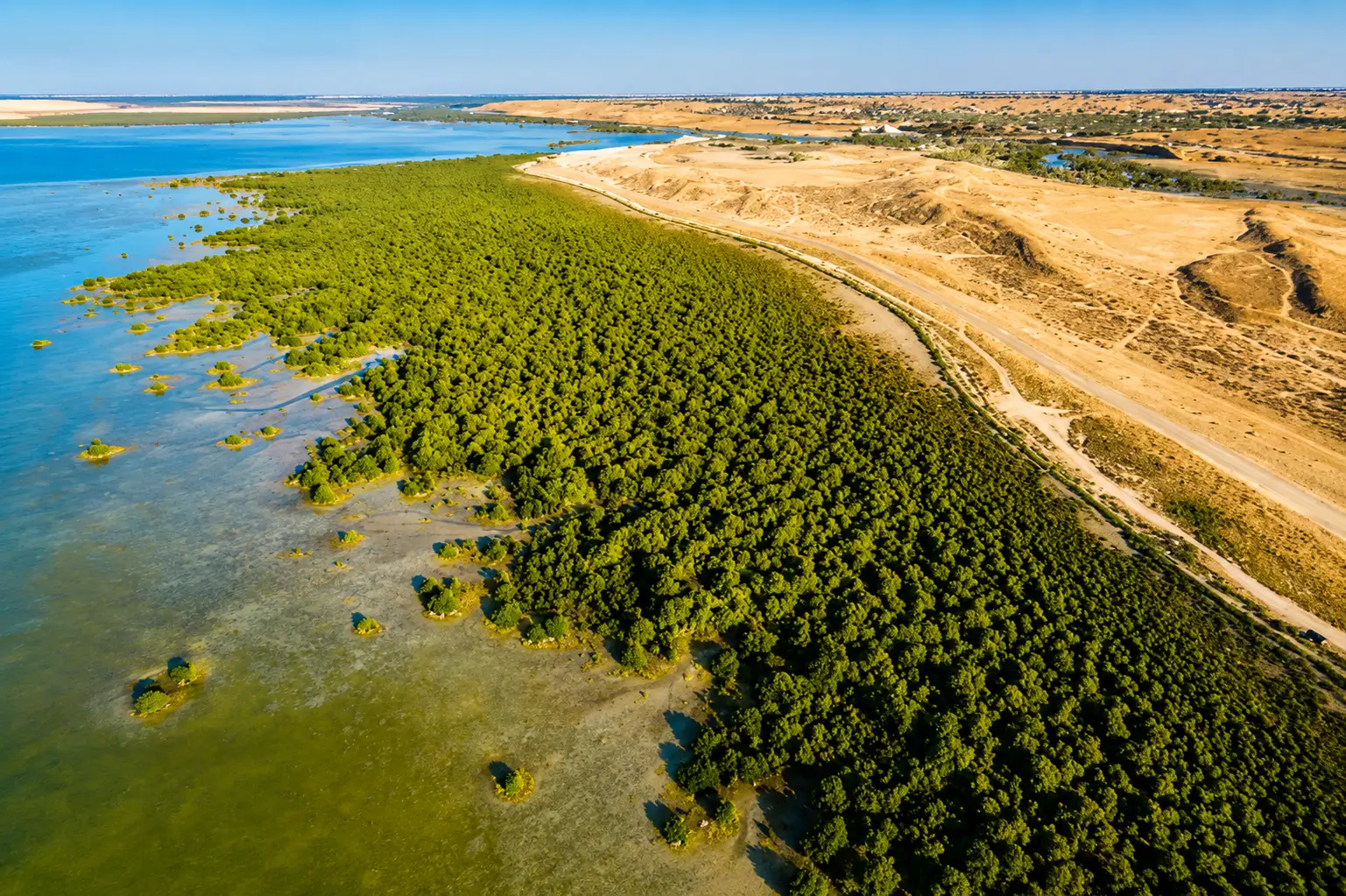
But once you arrive, the pace drops noticeably. Mangrove forests line parts of the coastline. Lagoons stretch along the old town edge. And the Arabian Gulf runs along the entire western side of the emirate.
The market here covers quite a range, which might surprise people who assume a smaller emirate means fewer options. Apartments, villas, townhouses, duplexes, and residential plots are all available. And freehold ownership for expatriates exists, though in designated zones only, which is worth checking carefully before committing.
Studios and one-bedroom apartments are concentrated in Al Salamah and along King Faisal Road, typically in mid-rise buildings with standard amenities, parking, sometimes a shared pool, and basic security. They suit individuals, young couples, or investors looking for rental yield.
Two and three-bedroom apartments appear in the Al Humrah area and a few newer mixed-use developments. Buildings like those in Al Humrah have marble floors, service elevators, CCTV, and covered parking, which is a bit more than people often expect from UAQ.
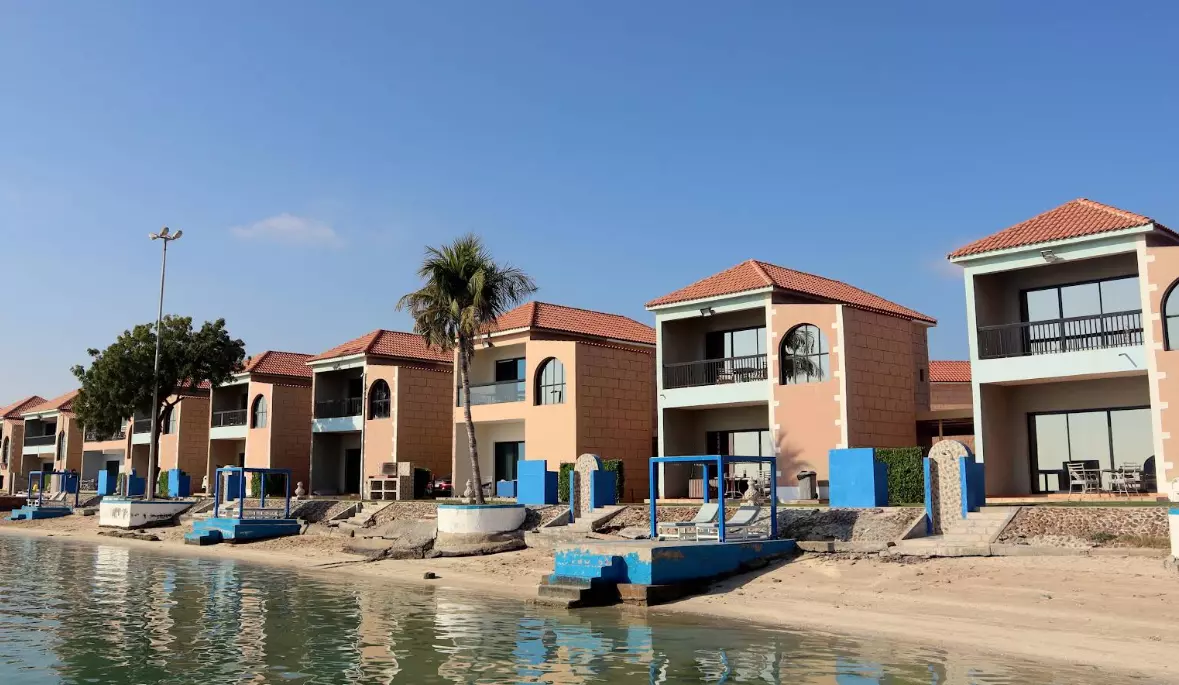
Villas, the most in-demand property type here, range from modest standalone homes to large, sea-view properties in gated communities. The Marina area has villa communities with up to six bedrooms. Al Dar Al Baida is also a waterfront villa community with spacious plots.
Townhouses are somewhere between the two. They tend to come bundled with community amenities like playgrounds and shared leisure zones, and they work reasonably well for families who want space without the full commitment of a standalone villa.
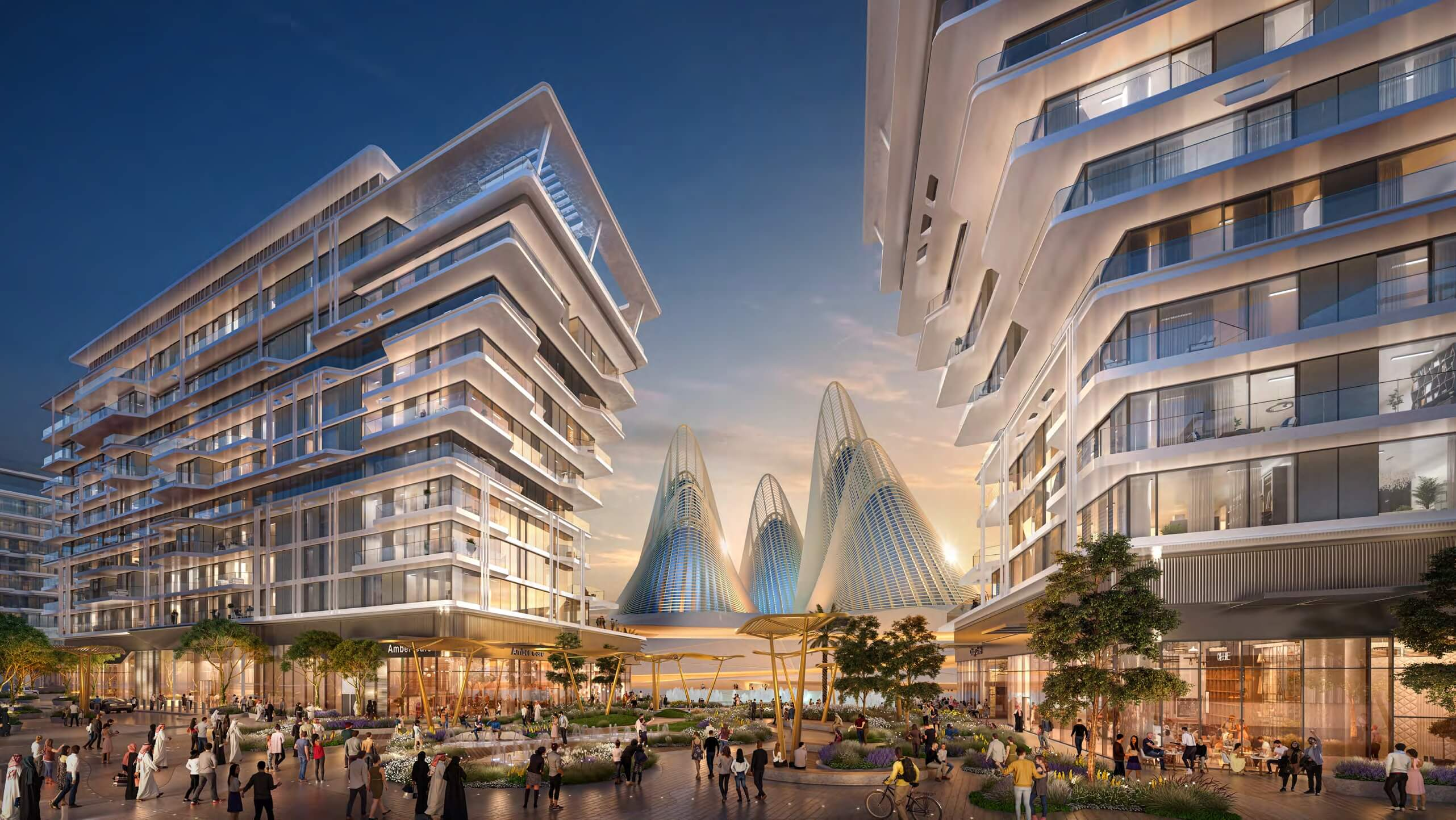
Off-plan developments are the most talked-about category right now. Sobha Siniya Island offers 100% freehold ownership to all nationalities, something that has genuinely shifted the conversation around UAQ. AYA Beachfront Residences by Deyaar has 442 units, from beach homes to sky villas.
Commercial and industrial properties are available near the UAQ Free Zone and the Emirates Modern Industrial Area. Commercial transactions in this zone saw heavy growth in 2024, particularly for warehouses and office spaces.
Rental profits have been said to be around 7% and 15% according to the property type and location. It is a range that always requires extra assessment, but the general picture from multiple sources points to UAQ outperforming some more established emirates on profits. In 2024, real estate transactions grew 28%.
Bordering Ras Al Khaimah is genuinely relevant here. Al Marjan Island, home to the upcoming Wynn resort, has seen prices climb sharply over the past two years, and UAQ sits just adjacent to that wave of demand.
Entry-level properties in UAQ are still priced 30 to 40% lower than comparable units in Al Marjan, which is the kind of gap that tends to close over time as infrastructure develops.
The UAQ masterplan divides the emirate into clearly zoned residential, commercial, and industrial areas. A causeway linking the UAQ mainland to Siniyah Island is part of the infrastructure work underway.
Road upgrades connecting the emirate more smoothly to neighbouring Ajman and onwards to Sharjah are also in progress. Whether all of this plays out on the timelines projected is something no guide can guarantee.
One of the most established schools in the emirate. It follows the British National Curriculum from Foundation Stage through Year 13 and sits in Al Salamah, which makes it accessible from much of central UAQ. Not as large as some schools bordering Sharjah, but well-regarded locally.
This school follows the SABIS curriculum, which integrates academic content with self-development and life skills. It has a purpose-built campus with a theatre, sports playground, kids' pool, library, and soccer field.

Located at Khalifa City, it is a fairly comprehensive setup for a smaller emirate. Families coming from Ajman or Ras Al Khaimah sometimes choose this school over options closer to home.
Offers the American curriculum aligned with California State Standards, from Kindergarten through Grade 12. The campus has science labs, IT labs, art rooms, an outdoor sports field, and an on-site medical clinic.
Daily bus transportation runs across UAQ and neighbouring emirates, which helps families manage longer commutes from communities near the Ajman border.
Follows the NCERT (CBSE) curriculum from KG to Grade 10. It has been operating in UAQ since 2010 and is particularly popular among South Asian expatriate families. Extracurriculars are offered alongside the core academic programme, which parents tend to appreciate.
It was founded in 1983, so it has a history in the emirate. It also follows the CBSE curriculum and prepares students from KG through Grade 12. A long-standing institution with a stable reputation.
A government university with programmes accredited by the Ministry of Education. Recent additions to its portfolio include a Bachelor of Science in Artificial Intelligence and Intelligent Systems, which reflects a real shift in how UAQ is positioning itself for the future.
It is among the more affordable higher education options in the UAE, which matters for residents who want to study locally rather than commute daily.
The public hospital that has served the emirate since 1984. In 2021, it received JCI accreditation, the Joint Commission International, alongside ISO accreditation from the Emirates International Accreditation Centre.
So the baseline here is not as low as the emirate's small size might suggest. It provides both primary and specialised medical services.
Managed by NMC Healthcare and opened in 2012. Located in the Al Salama area, roughly 10 kilometres southeast of UAQ city. It is a modern, 195-bed facility.

Ajman University's medical students now rotate through this hospital as part of a formal partnership that brings around 460 physicians and over 2,500 healthcare professionals into the broader network shared with facilities in bordering Ras Al Khaimah.
Community-level health centres that handle routine care, basic diagnostics, and general consultations.
They supplement the main hospital for day-to-day medical needs across different areas of the emirate. Residents in the southern parts of UAQ, near the Ajman border, tend to use these more regularly.
Provides primary care services to residents, particularly in the city centre and surrounding communities. Standard public health services are covered here, and E-clinic services are available digitally for some consultations.
| For anything highly specialised, advanced oncology, or certain surgical procedures or complex diagnostics, residents typically travel to Sharjah or Dubai. That is an honest part of the picture worth factoring in. |
The first multi-brand shopping mall in UAQ. Located off Al Ittihad Road (E11), between Sheikh Khalifa Hall and Sheikh Khalifa General Hospital. It carries global fashion, accessories, electronics, a supermarket, and an assortment of eateries. Smaller than the Mall of UAQ but well-located for residents in the Al Salamah area, and easy to access from bordering Ajman via the E11.
The main retail and lifestyle anchor of the emirate. Developed by LuLu Group International and opened in 2019, it spans roughly 100,000 square feet on a single level, which actually makes it easy to navigate. The mall holds 60 stores, a 9,122 sqm Lulu Hypermarket, a 5-screen cinema, and the Orange Hub.

Eleven F&B outlets cover fast food, sit-in restaurants, and cafes, with a drive-through facility as well. Practical services include Al Ansari Exchange, LuLu International Exchange, Dubai Islamic Bank, and DOCIB Pharmacy. A government services desk through Tawjeeh Saeed is also inside. Weekdays are noticeably quieter than weekends, which some residents genuinely prefer.
Located in the centre of the city. It focuses on budget-friendly goods, electronics, clothing, footwear, home decor, furniture, and children's toys. Not glamorous, but genuinely useful for everyday household needs. Residents who moved from Ajman or Sharjah often cite it as a convenient stop.
UAQ's dining scene is casual and multicultural rather than upscale or destination-driven. Most restaurants sit along the main roads and near commercial clusters, which keeps things practical if not particularly exciting.
A Lebanese option within about 20 minutes of Siniyah Island. Lebanese cuisine has a wide following across the northern emirates, and this is a locally known stop for families in the area.
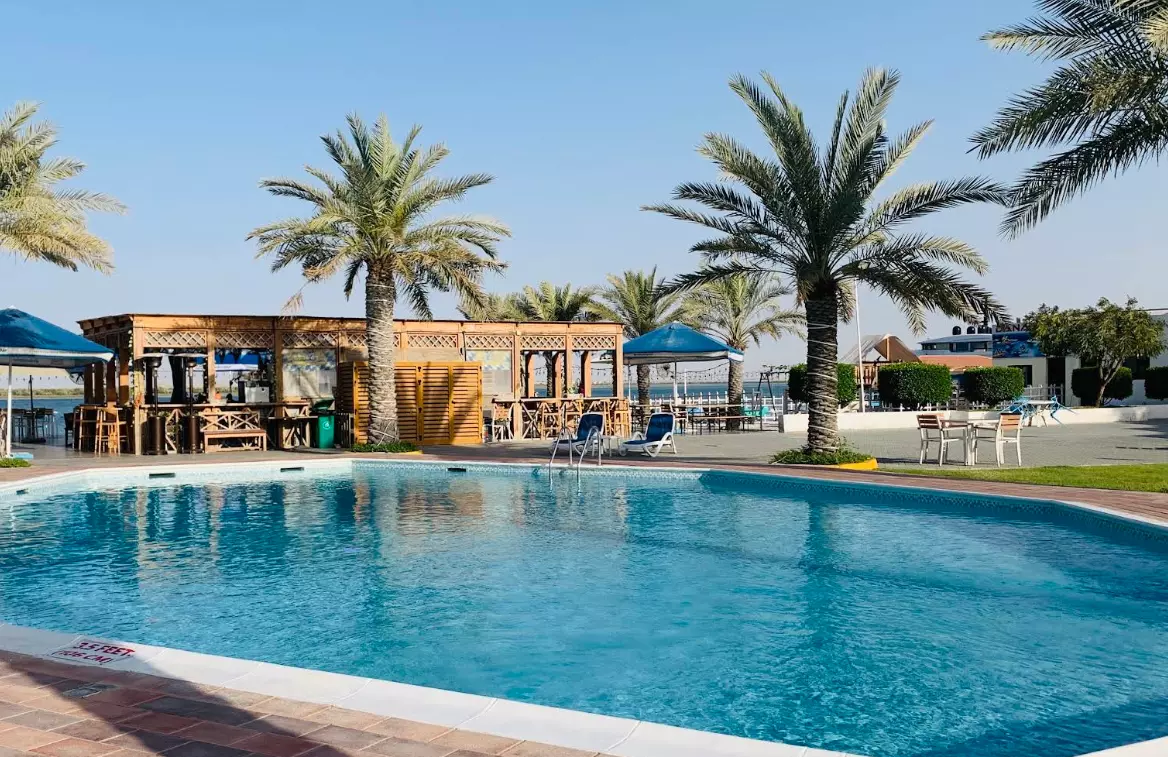
The Vida Beach Resort Umm Al Quwain operates four dining outlets: Origins for healthy international cuisine, Stage2 for light bites and snacks, SoCal for a bar-style pool lounge atmosphere, and a poolside bar.
So even for non-guests, these restaurants are accessible for lunch and dinner, which is how a number of UAQ residents use them on weekends.
The resort near Dreamland Umm Al Quwain has on-site dining that draws both guests and residents looking for a waterfront meal. The setting is more relaxed than curated, but it works.
The food court at Mall of UAQ covers enough variety for everyday dining, fast food brands, South Asian options, and some Middle Eastern staples. Residents living near bordering Ajman often prefer to dine there for a wider selection, which is worth being honest about.
The most consistently reviewed hotel in the emirate. It has a private beach, an infinity pool, a spa, a fitness centre, a tennis court, and two restaurants. Rooms carry sea or city views.
The property is pet-friendly, with specific conditions, and it draws guests coming from Dubai, Sharjah, and bordering Ajman for weekend stays. A popular Umm Al Quwain staycation option for residents of the northern UAE.
Located near Aqua Park Umm Al Quwain and Dreamland Umm Al Quwain. It offers waterfront villas and suites on a long stretch of coastline. A bit more private and villa-oriented than some of the other properties, which suits guests looking for a quieter setup.
Offers two outdoor pools, a sauna, a steam room, a coffee shop, and an international restaurant. Positioned close to water parks and cultural sites. Also within a reasonable distance of Sharjah's museums, an added draw for guests interested in the broader cultural offering of the northern UAE.
Umm Al Quwain Beach Hotel is a mid-range beachfront property with standard amenities and beach access. Often listed as a practical, no-frills option for short stays.

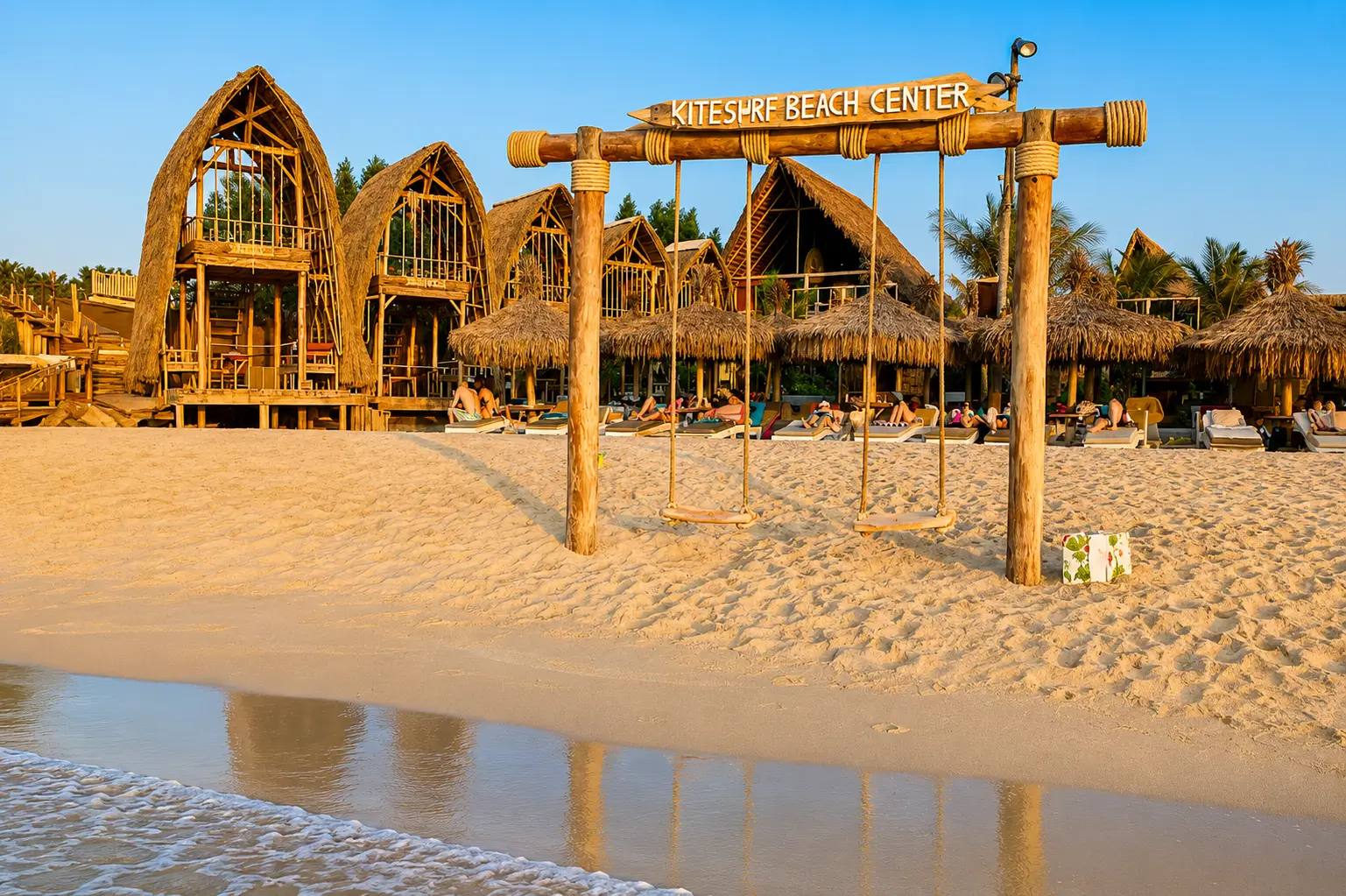
Lumi beach Umm Al Quwain is a beach club and leisure destination that has grown in visibility among residents from bordering Ajman and Sharjah. It represents the kind of casual beach access that UAQ does reasonably well: affordable, laid-back, and connected to the natural coastal setting.
Pearl Hotel Umm Al Quwain is a budget-friendly option in the emirate, suited for shorter stays or business travellers passing through. Simpler facilities, but centrally located enough to be convenient.
Not a conventional hotel. It is a campground on Siniyah Island, an experience-driven stay for those who want proximity to the mangroves, wildlife, and open water without the structure of a resort. Rated well for cleanliness and location. The kind of place that gets repeat visitors who value silence over service.
The mangroves are UAQ's most defining natural feature. Guided kayak and SUP tours operate through the lagoon system, and the shallow, protected waters make them genuinely accessible even for beginners.
Flamingos, gazelles, oryxes, and rare turtles inhabit Siniyah Island, bordering the mainland by a short causeway, and eco-tours focused on birdwatching and wildlife are available.
Inaugurated in 1997, Dreamland Umm Al Quwain was the first water park in the UAE and remains one of the largest in the Middle East. It sits on a coastal site surrounded by palm trees and covers over 250,000 square meters.
Water slides, wave pools, swimming areas, and saltwater attractions are all part of the setup. It is a full-day destination, and tickets can be booked online. Residents from bordering Ajman and Sharjah use this Umm Al Quwain water park regularly as a weekend outing.
Often used interchangeably with Dreamland in local conversation, the Aqua Park Umm Al Quwain label refers broadly to the waterpark facilities in this part of the emirate. It draws families year-round, especially during the cooler months.
UAQ is considered one of the best spots for beach camping in the UAE. The northern stretch of coastline, especially in winter, offers clear skies, wave sounds, and far less foot traffic than beaches in bordering Ajman or Sharjah. Families and groups camp fairly freely here during the cooler months.
The dune landscape near the mangrove beach area allows for off-road driving. Four-wheel-drive vehicles access the large dunes easily, and sunrise drives are particularly popular among residents.
Nothing organised or commercial about it, just open desert near the coast, which UAQ still has in abundance. A growing number of residents from bordering Ras Al Khaimah use this stretch of water specifically for this.
A leisure and water sports facility near the old town area. It offers boat rentals, fishing, and coastal recreational access. Locals and residents with an interest in fishing consider it a regular stop.
The museum sits inside the old fort and holds archaeological artefacts, traditional crafts, and cultural exhibitions covering the history of the emirate. It is a 10-minute walk from Flamingo Beach Resort and a reasonable half-day cultural visit.
The old town watchtowers surrounding it add a texture to the area that feels genuinely different from the newer parts of UAQ and from bordering Ajman's more urbanised edges.
The most full-featured spa in Umm Al Quwain. It has dedicated spa changing rooms and gym changing rooms for both men and women, each with showers, lockers, saunas, and steam rooms.
The gym is modern and well-maintained. Non-guests can access it through day-pass or membership arrangements, which a number of residents from nearby communities use regularly.
Palma Beach Resort Umm Al Quwain, the Royal Residence Umm Al Quwain, and the Barracuda Umm Al Quwain Resorts all carry their own spa and wellness services, massages, steam rooms, sauna access, and basic beauty treatments.
The level of service varies, and it is most honest to say these are resort amenities first, standalone wellness destinations second.
Standalone gyms and beauty salons are spread across Al Salamah and Al Humrah and near the Mall of UAQ. They serve the resident population, particularly the South Asian and Arab expatriate communities that make up a significant part of UAQ's demographics.
The density is lower than that of bordering Ajman or Sharjah, but the basics are covered. Residents who have particular fitness routines or beauty preferences tend to supplement with occasional visits to Ajman, which is close enough to make that practical.
This deserves its own honesty. Public transport in UAQ is minimal. There is no metro, no tram, and bus connectivity is limited. Taxis and app-based ride services like Careem operate, but not at the frequency or density of Sharjah or Dubai. Residents without a personal vehicle will find UAQ genuinely inconvenient for day-to-day movement, that is just how it is.
| Travel times from Umm Al Quwain by car in normal traffic. | |
| Ajman City | 30 minutes |
| Sharjah International Airport | 30 minutes |
| Ras Al Khaimah | 40 minutes |
| Dubai | 45 minutes |
| Sharjah City | 45 minutes |
| Note: Estimates based on normal traffic. Peak hours may add 10 to 20 minutes on major routes. |
The main highways serving the emirate are the E11 (linking it to bordering Ajman and then onwards to Sharjah and Dubai) and the E311. Siniyah Island is accessible by road via the new causeway and also by water transport.
UAQ does not have a commercial airport; Sharjah International Airport, roughly 30 minutes away, handles most of the emirate's air travel needs, with Dubai International Airport around an hour out.
UAQ still feels, in many ways, like what the UAE used to be before the skylines arrived. That is not nostalgia; it is just a factual description of what you encounter. The pace is slower, the coastline is less occupied, and the natural environment is more present in everyday life than it is in bordering Ajman or Sharjah. Whether that suits someone depends almost entirely on what they are looking for.
Families seeking a quieter setup with reasonable schooling, healthcare, and daily amenities will find UAQ workable. Investors looking for an early position in a market that is clearly attracting developer attention, such as Sobha, Deyaar, and RAK Properties, have genuine reasons to pay attention. And renters priced out of Sharjah or wanting space and coast without Dubai costs will find real options here.
But it is worth sitting with the honest limitations too. Specialised healthcare, dining variety, entertainment depth, and public transport are all more limited than in the bordering emirates. The emirate is growing, and the infrastructure is following, but it has not arrived yet in full.
Property prices here are still noticeably lower than in neighbouring emirates, which is the main reason people look into UAQ. Rental profits reportedly sit between 7% and 15%, and freehold ownership is available for all nationalities in certain zones.
But the infrastructure has not fully caught up yet. Public transport is minimal, so a car is not really optional. Dining variety is limited, and for anything specialised medically, you are likely to travel to Sharjah or Dubai. It is still developing, and that gap is worth factoring in carefully.
Can expatriates buy freehold property in Umm Al Quwain?
Yes, but only in designated freehold zones. Sobha Siniya Island is the easiest option with 100% freehold ownership for all nationalities.
So it is worth checking which specific development you are looking at before assuming ownership rights apply everywhere.
What rental profits can investors realistically expect in UAQ?
Figures quoted range between 7% and 15%, depending on property type and location. That is a wide range, honestly. And while multiple sources suggest UAQ outperforms some established emirates on yield, those numbers still deserve scrutiny before making any decisions.
How far is Umm Al Quwain from Dubai and Sharjah airports?
Sharjah International Airport is roughly 30 minutes away, which most residents find manageable enough for regular travel.
Dubai International is around an hour out. UAQ has no commercial airport of its own, so proximity to these two is what daily travel planning depends on.
Unlock an Exclusive Deal!

New Units for Sale Coming Soon
Find your dream property for Sale with expert guidance and personalized support
Consultation with Our Expert
We will call you back within an hour and also send you additional information by emailUnlock an Exclusive Deal