Commercial
Developers


Fine Home Social Profiles:
Fine Home © 2026. All rights reserved.
Terms & Conditions
Powered By

Commercial
Developers
Fine Home Social Profiles:
Fine Home © 2026. All rights reserved.
Powered By

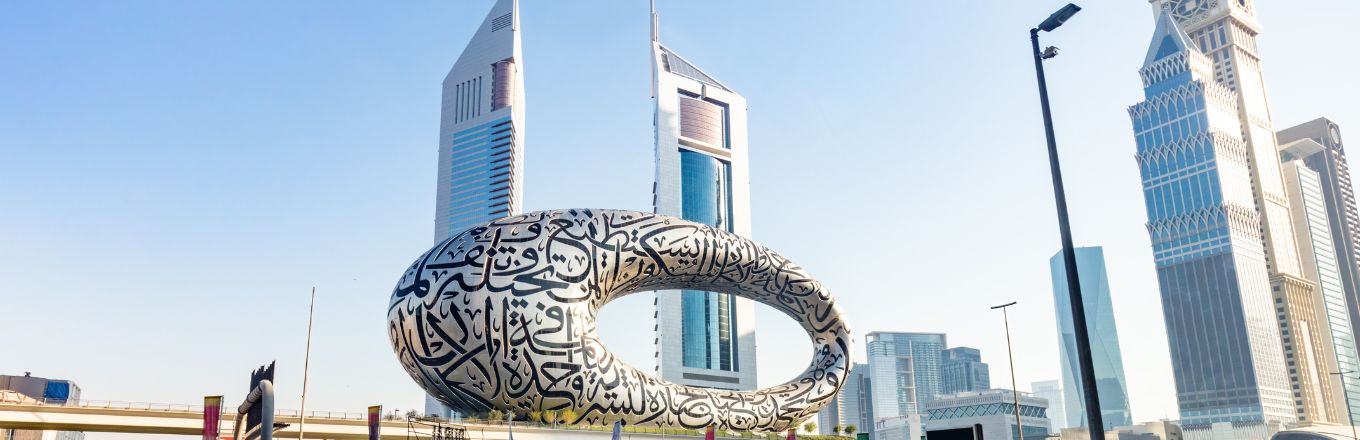
Dubai is one of the UAE’s most prominent destinations for families, working professionals, entrepreneurs, and property investors looking for a modern and highly connected lifestyle. The city offers a wide range of residential options, including apartments, villas, townhouses, branded ...
.jpg)
Dubai is one of the UAE’s most prominent destinations for families, working professionals, entrepreneurs, and property investors looking for a modern and highly connected lifestyle. The city offers a wide range of residential options, including apartments, villas, townhouses, branded residences, and off-plan properties across established and emerging communities.
Foreign nationals can own freehold property in designated areas of Dubai, making the city an established destination for international property investment. Property transactions and ownership transfers are registered through the Dubai Land Department, which maintains the official real estate register and regulates key aspects of the property market.
Dubai combines modern urban living with beaches, waterfront communities, parks, shopping malls, schools, healthcare facilities, restaurants, entertainment destinations, and business districts. The city also has an extensive public transportation network, including the Dubai Metro, tram, buses, taxis, and marine transport.
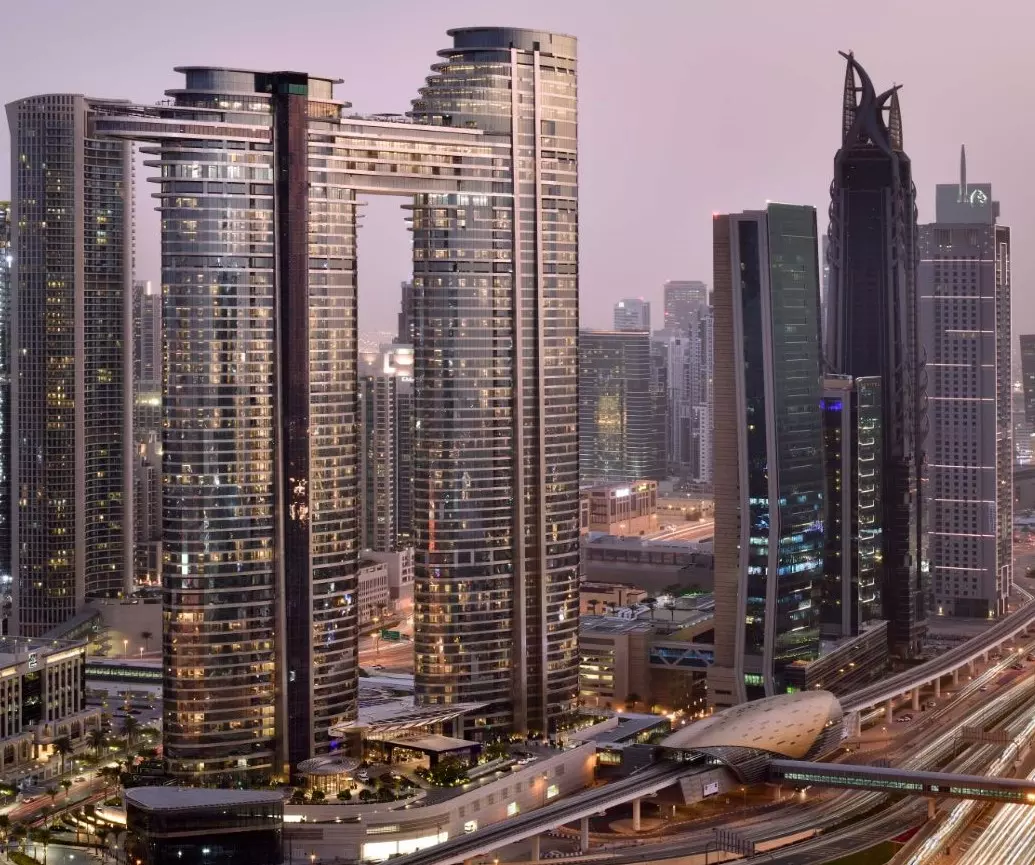
Downtown Dubai is one of the city's most recognizable central districts, known for Burj Khalifa, Dubai Mall, Dubai Opera, and a large collection of residential and commercial towers. The area attracts professionals, families, tourists, and investors who want to live close to major business, retail, dining, and entertainment destinations.
Its central location provides convenient access to Sheikh Zayed Road, Business Bay, DIFC, and other major parts of the city.
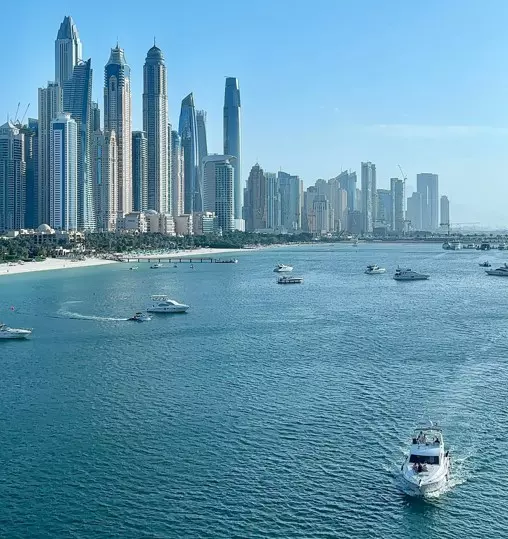
Dubai Marina is a waterfront community known for its residential towers, marina promenade, restaurants, cafés, and leisure facilities. The area offers a large selection of apartments, from studios and one-bedroom units to larger premium residences.
Dubai Marina is particularly popular with professionals and residents looking for an active waterfront lifestyle with convenient access to public transportation and major business districts.
Palm Jumeirah is one of Dubai's most recognizable residential and tourism destinations. The development features luxury apartments, villas, branded residences, hotels, beach clubs, restaurants, and waterfront properties.
The community is particularly associated with luxury living and high-end residential properties, while its location provides access to Dubai Marina, Dubai Internet City, Dubai Media City, and Sheikh Zayed Road.
Business Bay is a mixed-use district located next to Downtown Dubai and the Dubai Canal. It combines residential towers, offices, hotels, restaurants, and retail facilities.
The area is popular among professionals and investors because of its central location and proximity to major business and commercial destinations.
Dubai Hills Estate is a master-planned community offering apartments, villas, and townhouses surrounded by landscaped spaces and green areas.
The community includes Dubai Hills Park, Dubai Hills Mall, schools, healthcare facilities, restaurants, and recreational spaces. Its residential environment makes it particularly attractive to families and residents looking for a quieter lifestyle while remaining connected to central Dubai.
Jumeirah Village Circle is a large residential community offering apartments, townhouses, and villas. The area has developed into one of Dubai's major residential destinations, with supermarkets, restaurants, schools, parks, gyms, and other everyday facilities.
Its variety of property types and established residential infrastructure make it popular among both residents and property investors.
Dubai Creek Harbour is a modern waterfront development built around Dubai Creek. The community includes residential towers, waterfront promenades, restaurants, retail spaces, and public areas.
The development is positioned as one of Dubai's newer urban destinations and offers a combination of waterfront living, modern architecture, and connectivity to central Dubai.
Arabian Ranches is an established villa and townhouse community designed around a suburban family lifestyle. It features landscaped streets, parks, community facilities, schools, sports facilities, and retail destinations.
The community is particularly suitable for families seeking larger homes and a quieter environment away from the density of central Dubai.
Dubai Silicon Oasis is a mixed-use community combining residential, commercial, educational, and technology-related facilities. It offers apartments, offices, retail outlets, schools, and community services.
The area is suitable for professionals, families, and businesses looking for a location with access to both residential and commercial facilities.
Dubai South is a large master-planned development located close to Al Maktoum International Airport and major logistics and aviation infrastructure. It includes residential, commercial, logistics, and business districts.
The area is also connected to Expo City Dubai and major transportation routes, giving it an important role in Dubai's long-term urban development.
Apartments represent one of the largest residential property segments in Dubai. They are available across communities such as Downtown Dubai, Dubai Marina, Business Bay, JVC, Dubai Hills Estate, Dubai Creek Harbour, and Dubai Silicon Oasis.
Property sizes range from studios and one-bedroom units to larger two-, three-, and four-bedroom apartments and premium penthouses.
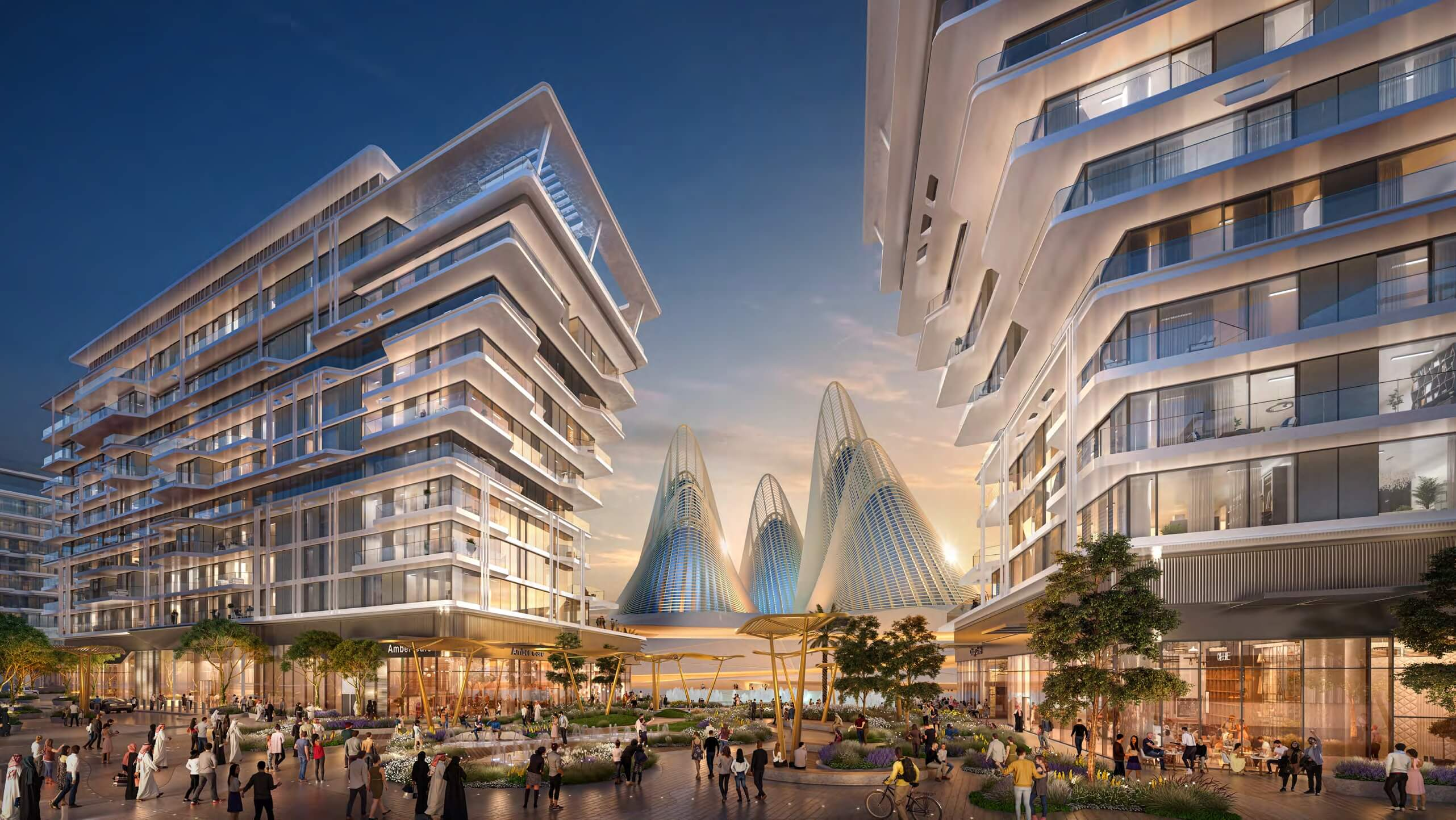
Townhouses provide a middle ground between apartment living and standalone villas. They are available in communities such as Jumeirah Village Circle, Dubai Hills Estate, Arabian Ranches, Town Square Dubai, Dubai South, and other master-planned developments.
They are particularly popular with families looking for additional space and private outdoor areas.
Villas are available across several established and luxury communities in Dubai. Arabian Ranches, Dubai Hills Estate, Palm Jumeirah, Emirates Hills, Jumeirah Islands, and The Springs are among the areas known for villa communities.
Villa options vary considerably in size, location, design, and price, ranging from family-oriented communities to ultra-luxury waterfront residences.
Dubai has a significant market for luxury and branded residences. These properties can be found in areas such as Downtown Dubai, Palm Jumeirah, Dubai Marina, Jumeirah, Dubai Creek Harbour, and other premium destinations.
Branded residences combine residential ownership with hotel-style services and amenities, depending on the development and operator.
Off-plan properties are widely available throughout Dubai, particularly in emerging master-planned communities and new waterfront developments.
Dubai's regulatory framework requires developers selling qualifying off-plan projects to use project escrow accounts, while off-plan transactions are registered through the Dubai Land Department's interim real estate register.
Foreign investors can purchase property in designated freehold areas, subject to the applicable regulations.
Dubai also has a large commercial real estate market covering offices, retail units, warehouses, commercial buildings, and other business properties.
Major commercial districts include Business Bay, DIFC, Dubai Internet City, Dubai Media City, Jumeirah Lake Towers, Dubai South, and other specialized business areas.
The Knowledge and Human Development Authority (KHDA) is the government authority responsible for overseeing private education in Dubai. It regulates and monitors private schools, early childhood centers, universities, and other educational institutions.
The authority also evaluates private schools and publishes information that helps parents understand the quality and performance of educational institutions.
Dubai offers a wide range of international curricula, including British, American, Indian, International Baccalaureate, and other educational programs.
Communities with strong access to schools include Dubai Hills Estate, Jumeirah, Arabian Ranches, Jumeirah Village Circle, Dubai Silicon Oasis, Al Barsha, and other established residential areas.
Dubai has several universities and higher education institutions offering programs in business, engineering, technology, media, medicine, design, and other fields.
Major academic destinations include Dubai International Academic City, Dubai Knowledge Park, and universities located across the city's established communities.
Dubai has a large healthcare network consisting of government hospitals, private hospitals, clinics, medical centers, and specialized healthcare facilities.
Dubai Health and the Dubai Health Authority play important roles in the emirate's healthcare system, while private healthcare providers operate across residential and commercial communities.
Major healthcare institutions include Dubai Hospital, Rashid Hospital, Latifa Hospital, Mediclinic City Hospital, American Hospital Dubai, Saudi German Hospital Dubai, King's College Hospital Dubai, and other specialized medical facilities.
Healthcare facilities are distributed across different parts of the emirate, allowing residents in major residential communities to access clinics and hospitals within reasonable distances.
Health insurance is an important part of living and working in Dubai, with employers and individuals arranging coverage according to applicable regulations and employment circumstances.
Residents can access government and private healthcare providers, while specialist hospitals and medical centers are available for more advanced treatment requirements.
Dubai's retail environment is one of the city's most recognizable lifestyle features, combining major international shopping destinations with community malls and traditional markets.
Dubai Mall is one of the world's largest shopping and entertainment destinations and is located in Downtown Dubai next to Burj Khalifa.
It includes hundreds of retail outlets, restaurants, entertainment attractions, and family-oriented experiences.
Mall of the Emirates is a major shopping and entertainment destination in Al Barsha. It combines international brands, restaurants, cinema facilities, and Ski Dubai.
Dubai Hills Mall serves the growing residential communities around Dubai Hills Estate. It offers retail stores, restaurants, entertainment, and family attractions.
Dubai Marina Mall serves the Dubai Marina community and surrounding waterfront areas. It provides retail, dining, and everyday shopping options within the residential district.
Ibn Battuta Mall is located along Sheikh Zayed Road and is known for its themed architectural design inspired by the travels of Ibn Battuta.
City Centre Deira is one of Dubai's established shopping malls and remains an important retail destination for residents of Deira and surrounding communities.
Mercato Shopping Mall is located on Jumeirah Beach Road and offers a European-inspired shopping environment with retail stores, restaurants, cafés, and entertainment options.
Dubai has one of the largest selections of international hotels and resorts in the UAE, ranging from luxury beachfront resorts and branded residences to business hotels and serviced apartments.
Burj Al Arab Jumeirah is one of Dubai's most recognizable luxury hotels, located on its own island near Jumeirah.
Its distinctive architecture, private beach facilities, restaurants, and premium hospitality services have made it one of the city's best-known landmarks.
Located on Palm Jumeirah, Atlantis The Palm combines luxury accommodation with restaurants, beaches, entertainment, and family attractions.
Its location makes it particularly popular among visitors looking for a resort-style experience.
One&Only The Palm is a luxury beachfront resort located on Palm Jumeirah. It offers a quieter environment compared with some of Dubai's larger resorts, with private beach areas, restaurants, and landscaped surroundings.
Address Downtown is located in the heart of Downtown Dubai, close to Dubai Mall and Burj Khalifa. Its location makes it suitable for visitors looking for direct access to shopping, dining, entertainment, and major city attractions.
Jumeirah Al Qasr is part of Madinat Jumeirah and offers luxury accommodation, beach access, restaurants, pools, and views of Burj Al Arab.
Dubai has a comprehensive transportation network that combines roads, metro, tram, buses, taxis, and marine transportation. The city's public transport system provides connections between major residential, commercial, shopping, and tourism destinations.
The Dubai Metro is one of the city's main public transportation systems. The Red and Green Lines connect major residential, commercial, shopping, and business districts.
The Metro provides access to areas including Downtown Dubai, Business Bay, Dubai Marina, Jumeirah Lake Towers, Deira, Bur Dubai, and other major destinations.
Dubai's public bus network covers a wide range of residential and commercial communities and provides connections to Metro and Tram stations.
The Nol Card is used to pay for public transportation services in Dubai, including the Metro, buses, tram, and selected marine transport services.
The Dubai Tram operates mainly around Dubai Marina, Jumeirah Beach Residence, and Al Sufouh, connecting residential and leisure destinations with nearby Metro stations.
Dubai taxis are widely available throughout the city and can be found at shopping malls, hotels, residential areas, airports, and major attractions.
Residents and visitors can also use app-based ride-hailing services for daily transportation.
Dubai offers a wide range of outdoor activities, from beaches and waterfront promenades to desert experiences, parks, cycling routes, and sports facilities.
Jumeirah Beach and Kite Beach are among Dubai's popular coastal destinations. They offer beach access, walking areas, cycling routes, cafés, restaurants, and water-based activities.
Kite Beach is particularly associated with outdoor sports and an active beach lifestyle.
Dubai Creek provides a combination of waterfront views, traditional heritage, restaurants, and cultural experiences.
Al Seef combines traditional Emirati-inspired architecture with restaurants, cafés, retail outlets, and waterfront walking areas.
Dubai Marina Walk provides a waterfront promenade surrounded by residential towers, restaurants, cafés, and leisure facilities.
It is a popular location for walking, jogging, dining, and enjoying views of the marina.
Dubai Parks and Resorts is a major entertainment destination offering theme parks and family-oriented attractions.
The destination provides a range of indoor and outdoor entertainment options suitable for families and visitors.
Global Village combines entertainment, cultural experiences, shopping, restaurants, and international pavilions representing different countries and cultures.
Dubai's desert provides opportunities for dune driving, sandboarding, camel riding, desert camps, and other outdoor experiences.
Dubai Miracle Garden is a seasonal outdoor attraction featuring large floral displays and themed installations.
Hatta is located within the Emirate of Dubai in the Hajar Mountains and offers a different outdoor environment from the city's urban areas.
Activities include hiking, mountain biking, kayaking, and outdoor adventures.
Dubai has a large fitness and wellness sector, with international gym chains, boutique studios, sports clubs, swimming facilities, yoga centers, and specialized wellness destinations.
Major fitness operators have branches across Dubai's residential and commercial communities.
Fitness First operates multiple locations across the city and provides gym facilities, group classes, and fitness programs.
GymNation has several locations and offers large-format fitness facilities with a range of training equipment and classes.
Gold's Gym operates multiple branches throughout Dubai and is widely known for strength training and general fitness.
UFC Gym combines traditional fitness training with combat-sports-inspired workouts.
Dubai also has a growing number of boutique fitness studios focusing on Pilates, yoga, HIIT, cycling, boxing, functional training, and other specialized workouts.
These studios are particularly common in communities such as Dubai Marina, Downtown Dubai, Jumeirah, Business Bay, Dubai Hills Estate, and Palm Jumeirah.
Padel has become increasingly popular in Dubai, with courts available across residential communities, sports clubs, hotels, and dedicated facilities.
Cycling is also supported through dedicated routes and cycling tracks in several areas, including Al Qudra and Nad Al Sheba.
Dubai has a well-developed beauty and wellness sector serving residents, professionals, and international visitors.
Luxury hotels and resorts offer high-end spas, while residential communities have numerous salons, beauty centers, barbershops, nail studios, and skincare clinics.
Jumeirah, Downtown Dubai, Palm Jumeirah, Dubai Marina, and Dubai Hills Estate have a particularly wide selection of premium beauty and wellness services.
Wellness services include:
The city's combination of luxury hospitality, residential communities, and international clientele continues to support the growth of the beauty and wellness sector.
Dubai is a highly international city with residents and professionals from many different nationalities. The city has a structured regulatory environment and well-developed infrastructure supporting residential, business, tourism, and commercial activities. Visit Dubai describes the city as home to almost 200 nationalities.
Dubai's communities vary considerably in character. Central districts provide high-density urban living, while communities such as Arabian Ranches, Dubai Hills Estate, and The Springs provide a more suburban residential environment.
Dubai has a hot desert climate, with the cooler period generally providing better conditions for outdoor activities.
From October through April, residents can enjoy beaches, outdoor dining, walking, cycling, parks, and other outdoor activities more comfortably.
During the hotter summer months, residents generally rely more heavily on air-conditioned malls, gyms, entertainment venues, indoor attractions, and covered public spaces.
Dubai has a year-round calendar of cultural, entertainment, shopping, sporting, and business events.
The city combines modern attractions with traditional destinations such as Al Fahidi Historical Neighbourhood, Dubai Creek, traditional souks, and heritage areas.
Major venues and destinations also host concerts, exhibitions, conferences, sporting events, festivals, and seasonal activities throughout the year.
For individuals working in Dubai, there is currently no UAE federal personal income tax on individuals' employment income.
This is one of the financial factors that contributes to Dubai's appeal among international professionals.
However, residents and investors should distinguish between personal income tax and other taxes, fees, and government charges that may apply to specific transactions, businesses, or services.
Dubai offers a combination of modern infrastructure, international connectivity, diverse residential communities, extensive shopping and entertainment options, beaches, business districts, and a wide range of property choices.
The city provides options for different lifestyles, from high-rise waterfront apartments to suburban villas and large master-planned communities.
Its established real estate regulatory framework also provides formal systems for property registration and transaction management through the Dubai Land Department.
The summer climate can make outdoor activities uncomfortable for extended periods, particularly during the hottest months.
Some residential communities are highly dependent on private cars, especially areas that are farther from Metro stations.
Property prices and rental costs can also vary significantly between communities, particularly in prime waterfront and central locations.
Yes. Foreign nationals can own freehold property in areas designated for foreign ownership in Dubai. The Dubai Land Department confirms that foreign ownership is permitted in designated freehold areas, while ownership rights and property transactions are governed by Dubai's real estate regulations.
There is no single area that is suitable for everyone.
Families may prefer communities such as Dubai Hills Estate, Arabian Ranches, or Jumeirah because of their residential environment, schools, parks, and larger homes.
Young professionals may prefer Downtown Dubai, Business Bay, Dubai Marina, or Jumeirah Village Circle because of their apartments, amenities, connectivity, and access to employment and entertainment destinations.
For waterfront and luxury living, areas such as Palm Jumeirah and Dubai Creek Harbour offer different types of premium residential experiences.
Dubai can be expensive, particularly in premium residential areas and for larger properties, international schools, and luxury lifestyles.
However, the overall cost of living varies considerably depending on the community, property type, transportation choices, schooling, dining habits, and lifestyle.
Dubai has an established and highly active real estate market with a wide range of residential and commercial properties.
Investors should evaluate each property based on factors such as location, purchase price, rental demand, service charges, financing costs, expected rental income, potential capital appreciation, developer reputation, and the specific regulations applicable to the property.
Dubai offers apartments, villas, townhouses, penthouses, branded residences, off-plan properties, commercial units, warehouses, and other real estate formats.
Foreign investors can purchase eligible properties in designated areas, including off-plan properties, subject to the applicable regulations and project requirements. Dubai's regulatory framework includes an interim real estate register for off-plan transactions and escrow requirements for qualifying development projects.
Dubai has the Metro, tram, public buses, taxis, marine transport, and other mobility options. The city's public transportation network connects many major residential, commercial, and tourism destinations.
Popular family-oriented communities include Dubai Hills Estate, Arabian Ranches, Jumeirah, The Springs, Jumeirah Village Circle, and other master-planned residential communities.
Palm Jumeirah, Downtown Dubai, Emirates Hills, Jumeirah, Dubai Hills Estate, and selected waterfront communities are known for premium and luxury residential properties.
 Park
Park Restaurant
 School
 Hospital
 Mall
Mall Cinema
Unlock an Exclusive Deal!
New Units for Sale Coming Soon
Find your dream property for Sale with expert guidance and personalized support
Consultation with Our Expert
We will call you back within an hour and also send you additional information by emailUnlock an Exclusive Deal