Commercial
Developers


Fine Home Social Profiles:
Fine Home © 2026. All rights reserved.
Terms & Conditions
Powered By


Commercial
Developers
Fine Home Social Profiles:
Fine Home © 2026. All rights reserved.
Powered By

.webp)

Khalifa City Abu Dhabi area guide with property prices, rental trends, schools, hospitals, transport links, amenities, lifestyle, and living in 2026 today.
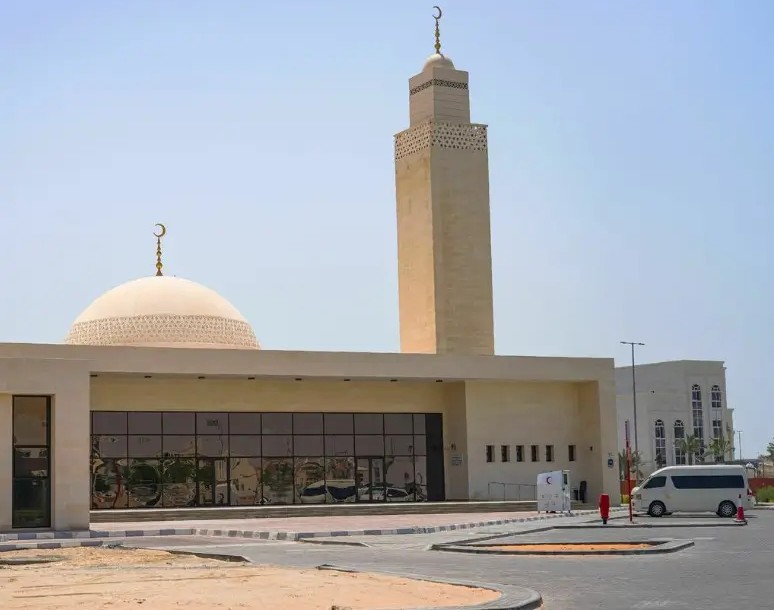
Khalifa City is one of Abu Dhabi's most established suburban communities, known for spacious villas, family-friendly living, and excellent connectivity. And what it is and has been for years is one of the most consistently demanded suburban communities in the capital, particularly among families.
This Khalifa City area guide discusses location, types of properties, ownership rules, drawbacks, and how it honestly stacks up against other Abu Dhabi communities.
Khalifa City is a residential suburb in Abu Dhabi City, located about 30 kilometres southeast of the city centre. It was originally developed as a residential area for Emirati families, but it is now a community of over 100,000 people.
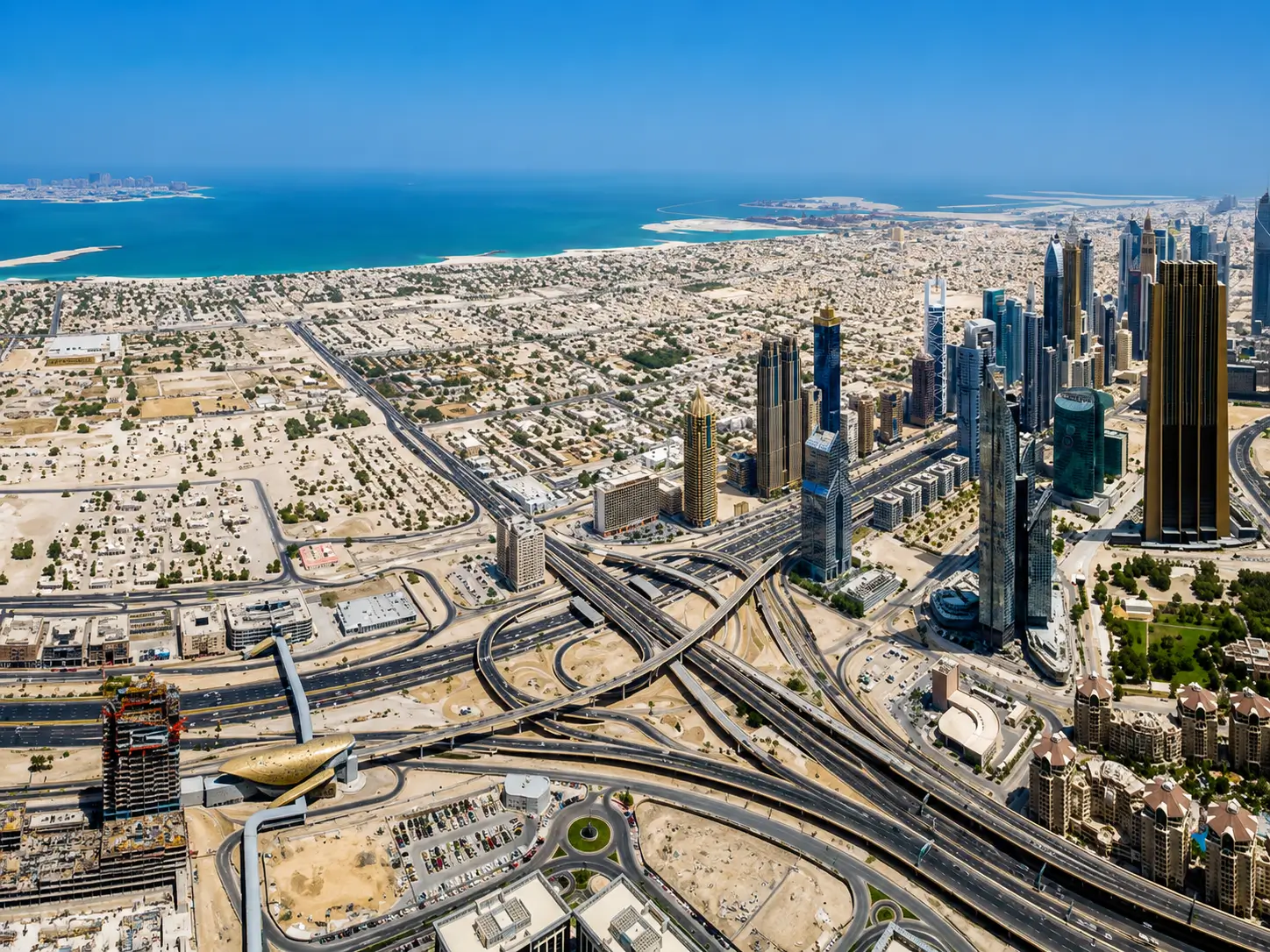
The area was divided into three zones, Khalifa City A, Khalifa City B, and New Khalifa City. But they have since been renamed. Khalifa City B is now Shakhbout City, and New Khalifa City is now Zayed City. When people say "Khalifa City," they almost always mean Khalifa City A.
The whole of Khalifa City is developed by Aldar Properties and has grown into a desirable residential location, mostly for its large villas and inexpensive apartments. The community has many reputable schools for kids, retail centres, and dining options for daily life, all to provide an adequate lifestyle in a suburban environment.
Villas and compounds are the main property types in Khalifa City, starting from 4-bedroom homes to 11-bedroom mansions with sizes ranging from 3,000 sq ft to 124,000 sq ft for a 12-villa compound.
There are also apartment buildings with properties from compact studios to 4-bedroom apartments, though apartments in the main Khalifa City A area are currently available for rent only and not for sale.
Khalifa City A also provides the opportunity to purchase plots of land, which start from 10,000 sq ft to 120,000 sq ft, to build your own home. The neighborhood of Khalifa City offers more than 280 residential plots where families can build villas with their unique individual designs.
Saadiyat Island is a different market entirely. Beach, luxury villas, the Louvre, and Cranleigh School. Average prices for Saadiyat Lagoons villas range from AED 8.5 million to AED 15 million. If luxury waterfront and cultural prestige are the priority, Saadiyat wins clearly. Khalifa City is for those who want more space per dirham, proximity to schools, and a quieter suburban life.
Yas Island has amazing places, such as Ferrari World and Warner Bros. World, and prices are around AED 1.5 million (more accessible). It is also fully freehold for expats, which Khalifa City's mainstream market is not.
Yas has more entertainment and lifestyle options on its land. Khalifa City is more like a practical and less entertainment-oriented place, better for longer family living than weekend excitement.
Al Reef is more affordable, comparable with higher villa returns (6.34%), and offers full freehold access for expats. It is popular with families, first-time buyers, and investors because Khalifa City, Al Reef, and Masdar City are generally in the affordable to middle-market category. The biggest trade-off of Al Reef is that it is farther from the city and has fewer schools and amenities nearby.
Khalifa City has a fair number of nurseries scattered through its residential streets, and most parents seem to find one within a short drive of home. They follow Montessori, British EYFS, or American-style early years frameworks, though quality and facilities vary quite a bit from one to the next.
Raha International School follows the IB curriculum and has been rated Outstanding by ADEK, which is the top mark available.
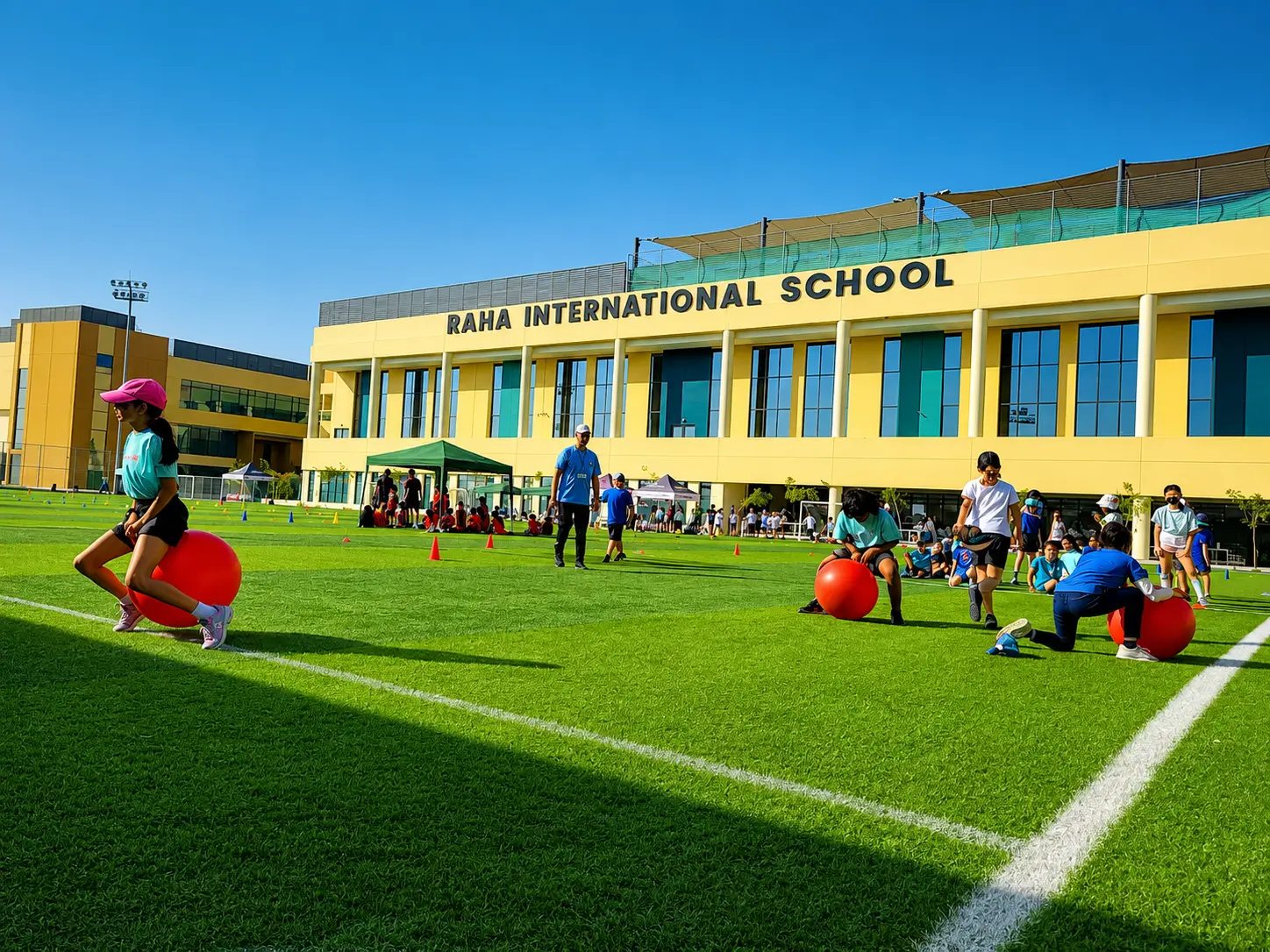
It is spread across a fourteen-acre campus and belongs to the Taaleem group, and it is one of the more established names families mention when they talk about schools in this part of Abu Dhabi.
GEMS American Academy runs an American curriculum from Pre-K through Grade 12, blended with the IB Diploma Programme at the senior level.
It serves students from more than ninety nationalities, and the sports setup is impressive, with a six-court sports hall, a full football pitch, four tennis courts, and a competition-sized pool.
The International School of Choueifat operates on the SABIS curriculum, which is a bilingual, mastery-based system with frequent assessments. It has been around in various forms for decades globally, and the Khalifa City campus has built a reasonably solid reputation locally.
Horizon Private School, Al Ittihad National Private School, Crescent International Private School, and Yasmina British Academy round out the main options, covering American and British curricula. Horizon has a pool, gym, and soccer field on campus, which families with sporty kids appreciate.
Khalifa City has a decent spread of clinics and medical centres built into its retail areas, including one tucked inside Deerfields Mall. These cover every day needs like general practice, dental, and basic diagnostics, and most residents seem to manage fine with what is nearby.
For anything more specialised, people end up traveling toward central Abu Dhabi or over to Al Raha Beach, where a women's and children's hospital is close enough to be a common reference point for families here.
Sheikh Khalifa Medical City is the flagship tertiary hospital for the region, with 441 beds and sixteen outpatient specialty clinics. It is not located inside Khalifa City itself, it is in central Abu Dhabi, so residents of Khalifa City are looking at a proper drive here for major hospital care.
That is just how it is, and it is a fair trade-off for the quieter, more suburban feel of the neighborhood. Most people seem to accept the commute in exchange for lower density and more space at home.
Khalifa City is next to the highway connecting Abu Dhabi and Dubai for easy access to both emirates. From Khalifa City, you can get to Abu Dhabi International Airport in just 10 to 15 minutes, and Downtown Abu Dhabi is about only 25 minutes away.
Khalifa City also has the headquarters of Etihad Airways, a landmark visible from both sides of the highway when approaching Abu Dhabi from Dubai. For people commuting to Dubai, the Khalifa City location truly works, as its connectivity to Sheikh Zayed Road is a reasonable choice for people working in the neighbouring emirate.
Public transport is limited in Khalifa City. But there are several bus stops you can find within the community, with routes No. 160, 161, 162, and 216 running straight through Khalifa City. But if we speak practically, most people here drive their own vehicles for commuting. There is also no metro in Abu Dhabi.
Khalifa City is a quiet and easy place for families to feel like a community. It is made for people who prefer their privacy, open spaces, and a slower pace of life.
There is greenery along the streets, and the parks are perfect, peaceful places for evening walks. The community features parks, quieter residential streets, and family-oriented public spaces.
One trade-off many of its residents report is less waterfront glamour, but it matters less to families focused on schools, playspace, and community. That is a fair summary, as it is not a place with a beach or a vibrant waterfront. It is a proper neighborhood, with wide streets, large plots, and a calmer rhythm.
Khalifa City is a non-freehold area. Only UAE and GCC nationals can purchase property on a freehold basis in the main Khalifa City A zone.
Expats can rent but cannot buy in the standard residential areas.
However, there are exceptions within the broader Khalifa City boundary.
Reportage Village, Khalifa City, has freehold ownership for UAE nationals and international buyers to have a long-term investment opportunity. Similarly, Bloom Living in Zayed City (New Khalifa City area) is also structured as a freehold zone.
So, if you are a non-GCC expat buyer, your path into this community runs through specific registered off-plan projects rather than the general villa market. Always verify with the Abu Dhabi Department of Municipalities and Transport (DMT) or with a licensed agency, such as Fine Home Real Estate.
Khalifa City connects directly to the E11 highway toward Dubai and the E22 toward Al Ain, which makes it convenient for anyone commuting between emirates or heading east regularly.
This road access is one of the stronger practical arguments for the area, especially for people who work in Dubai but want lower-density living. It does mean, though, that daily life leans heavily on having a car, since public transport does not quite fill the gap the way it does on Abu Dhabi Island.
There is no metro line here, and that is just a fact residents have to plan around. The K3 and K4 bus routes connect Khalifa City to the city center, and taxis, along with Careem and Uber are widely available and generally reliable.
Compared to Al Raha Beach, which is closer to more established transport links, Khalifa City residents rely more on private cars for daily errands, school runs, and pretty much everything else.
| Travel times from the community by car in normal traffic. | |
| Sheikh Zayed Grand Mosque | 11 minutes |
| Zayed International Airport | 11 minutes |
| Yas Island (Ferrari World / Yas Mall area) | 18 minutes |
| Abu Dhabi Corniche / City Centre | 21 minutes |
| Dubai (Downtown) | 68 minutes |
| Note: Estimates based on normal traffic. Peak hours may add 10 to 20 minutes on major routes. |
Khalifa City carries a suburban, low-density feel, with wide streets and mostly low-rise buildings. It is quieter than central Abu Dhabi, and residents often describe it as more relaxed pace-wise.
Compared to Al Reem Island's high-rise density or Yas Island's entertainment-driven energy, Khalifa City reads as more residential-first, less about nightlife or spectacle, and more about settling into daily routine.
The combination of big villas, private gardens, and nearby schools makes the area a common choice for families specifically. It is not really built for singles chasing a fast social scene; that crowd tends to head toward Yas Island or downtown instead.
Families weighing Khalifa City against Al Raha Gardens find the two comparable in lifestyle terms, though Al Raha Gardens leans slightly more master-planned in feel.
Space is the big one here. Villas come with private gardens, and residents get noticeably more square footage per dirham than on Al Reem Island or Saadiyat Island. The E11 and E22 highways are right there, so Dubai and Al Ain stay within easy reach. Schools are strong too, honestly, some of the best around.
Foreign buyers cannot own freehold here, only rent, which rules out a chunk of investors right away. There is no metro line, so daily life leans heavily on cars or the K3 and K4 buses.
Malls and cinemas are limited too, nothing like Yas Island, meaning trips to Deerfields or Al Raha Mall become fairly routine.
Can expats buy property in Khalifa City, Abu Dhabi?
Most of Khalifa City A is non-freehold, meaning standard purchase rights do not apply to non-GCC foreigners. However, specific off-plan projects like Reportage Village and Bloom Living are registered as freehold to allow international buyers full ownership rights.
What is the average villa rental price in Khalifa City?
Annual villa rents range from AED 135,000 to AED 199,000 for affordable units based on 2025 market data.
Smaller apartments start from around AED 45,000 per year, which makes it one of the more competitively priced family communities of Abu Dhabi.
Is Khalifa City a good investment for rental returns?
Villa ROI in Khalifa City sits around 6.18% (competitive within Abu Dhabi's affordable segment). Family villa prices also surged roughly 30% in 2025, mostly due to consistent demand from expat families, strong school access, and limited comparable supply nearby.
 Park
Park Restaurant
 School
 Hospital
 Mall
Mall Cinema
Unlock an Exclusive Deal!