Commercial
Developers


Fine Home Social Profiles:
Fine Home © 2026. All rights reserved.
Terms & Conditions
Powered By


Commercial
Developers
Fine Home Social Profiles:
Fine Home © 2026. All rights reserved.
Powered By
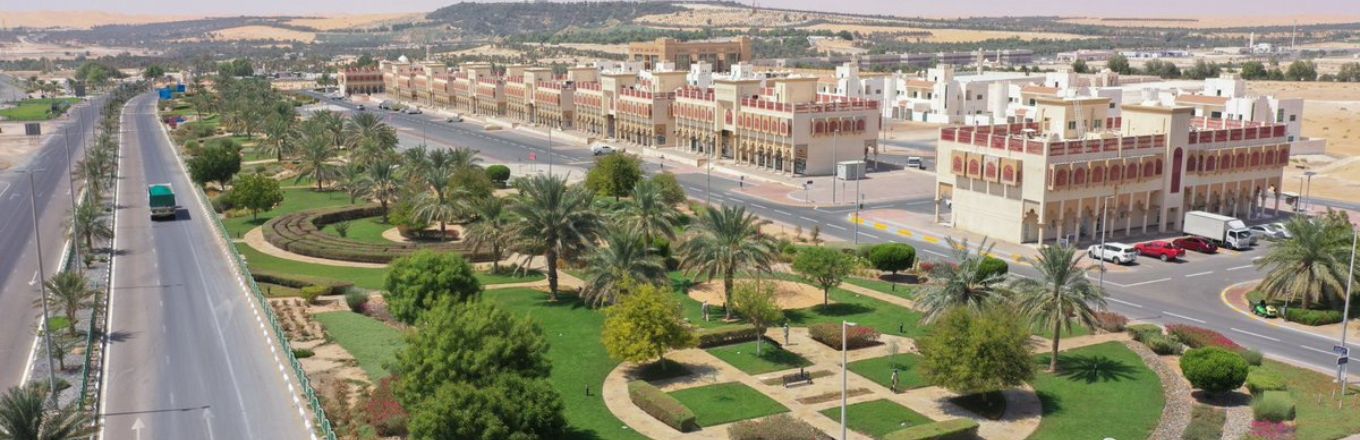
Thinking about living or investing in Al Dhafrah, Abu Dhabi? Learn about property prices, rentals, schools, healthcare, and daily life in the area.
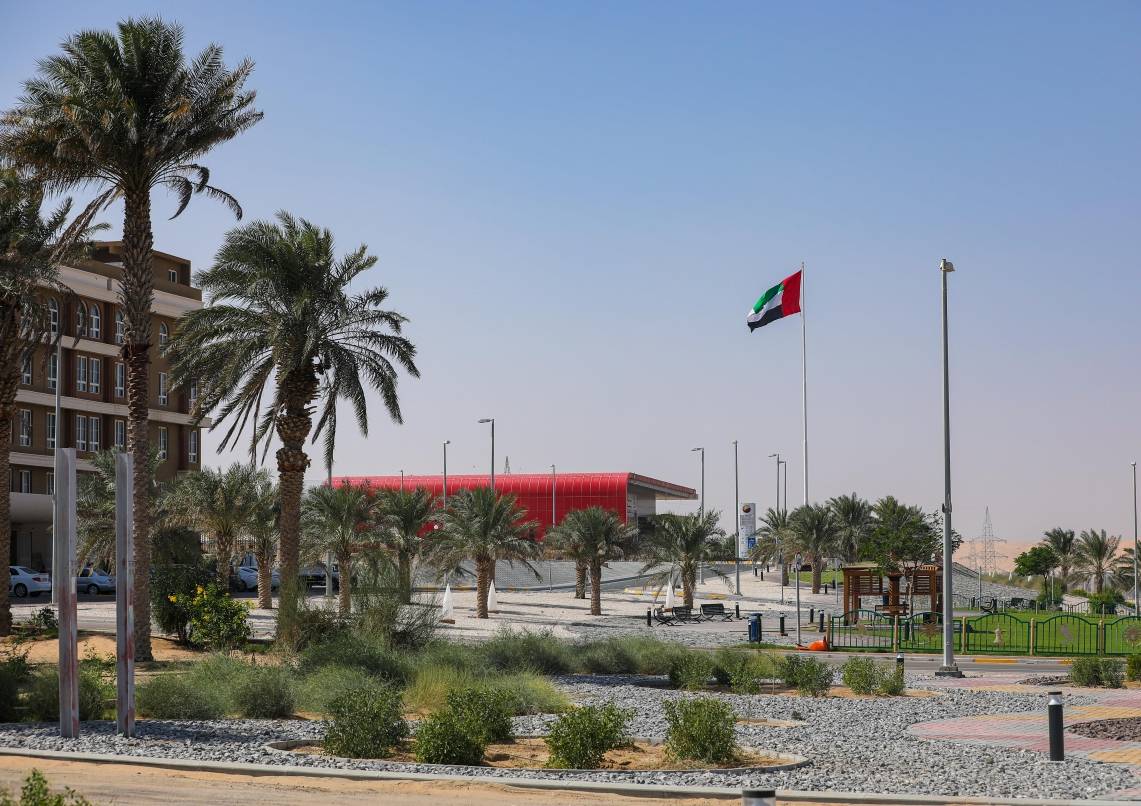
Al Dhafrah is one of the more misunderstood areas of Abu Dhabi, partly because the name covers two very different things. One is a big western region, covering over 71% of the entire emirate, built around oil, gas, and desert heritage.
The other is a quieter residential neighborhood in Abu Dhabi. Both attract different people for different reasons. This Al Dhafrah guide explains what each actually offers, property prices, lifestyle, schools, investment reality, and how each compares to other communities across the emirate.
Before anything else, there is a naming issue worth sorting out. When people search for the Al Dhafrah residential community in Abu Dhabi, they are often referring to two different things, and confusion can lead to wasted time.
Al Dhafrah (also spelled Al Dhafra or Al Gharbia) is one of three municipal regions in the Emirate of Abu Dhabi, forming the western part of the UAE. It occupies 71% of the emirate's land area yet has the smallest population and population density of the three regions. This is the microregion: vast, largely desert, primarily industrial, and energy focused.
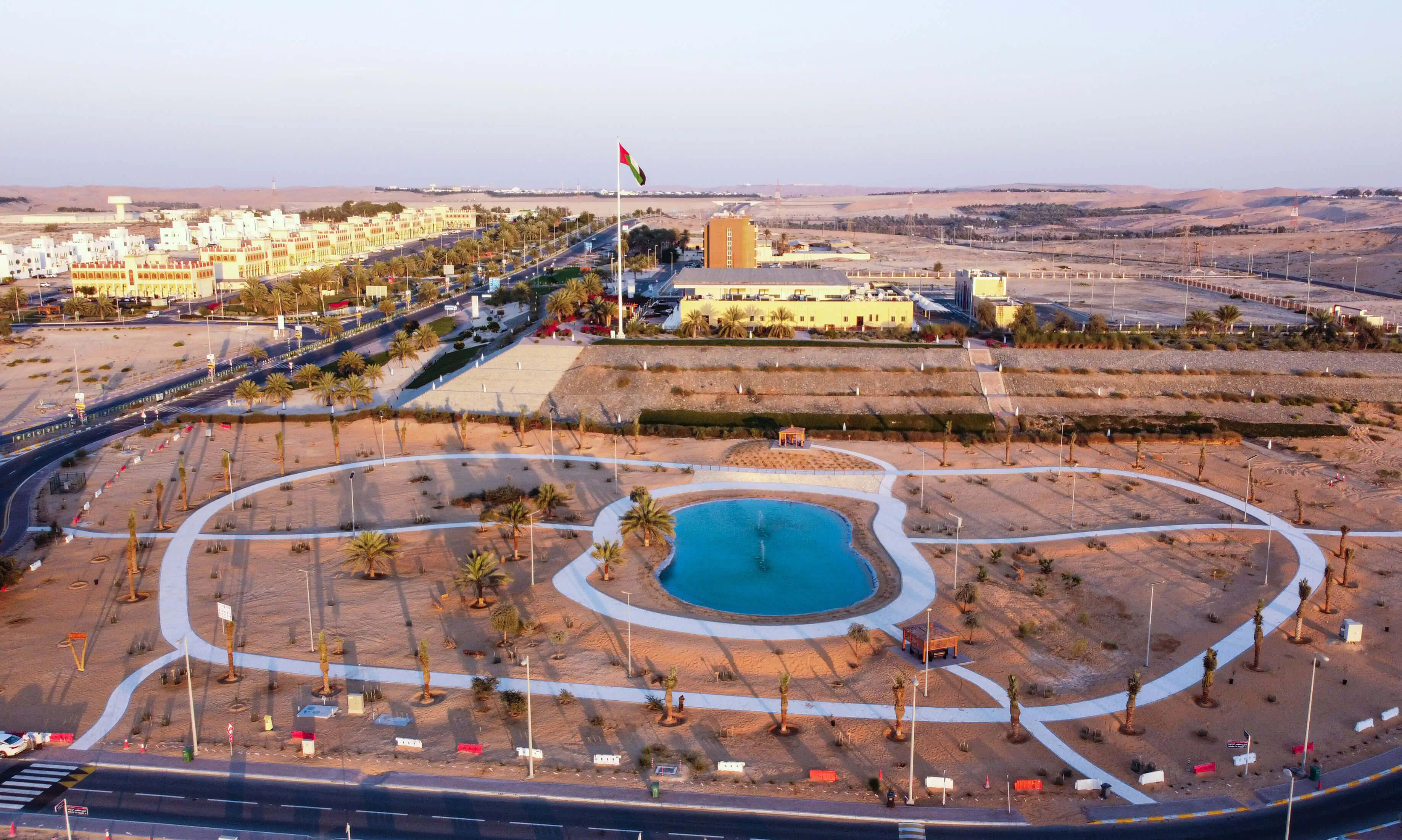
The region occupies approximately 59,760 square kilometers, about 83% of the total emirate area. Its capital is Madinat Zayed, also called Bida Zayed. The literal meaning of Al Dhafrah in Arabic is "where desert meets sea," which gives you a reasonable mental picture. Along its coastline are scenic beaches.
Inland, there are sandy dunes historically used for desert safari rides. The region is most commonly associated with ancient forts and natural lands. Al Dhafrah has seven townships: Madinat Zayed, Ruwais, Ghayathi, Liwa, Al Mirfa, Sila, and Dalma. Each of these functions as a semi-independent community with its own character.
Hydrocarbon reserves of Al Dhafrah account for 90% of the total reserves of the emirate, which in themselves account for 90% of the reserves of the country. That context matters for property buyers and investors; this is not a dormant rural zone. It underpins a big portion of the national income of the UAE, and the investment of the government in its infrastructure reflects that.
Six Western Region ports built, developed, and managed by Abu Dhabi Ports Company serve the coastal communities of the region, supporting fishing, tourism, logistics, and leisure, as well as facilitating transport between the mainland and offshore islands.
Located in the Al Dhafrah Region of Abu Dhabi, Madinat Zayed is the administrative and commercial center of the western region. It was a small desert settlement, but it is now a fully planned city with modern amenities, government services, and residential neighborhoods.
As the largest city in Al Dhafra, Madinat Zayed serves as a vital link between smaller desert communities and Abu Dhabi City. The daily living cost in Madinat Zayed is quite lower than it is in central Abu Dhabi. Annual rental prices for apartments in Madinat Zayed start from AED 18,000 for a studio around 400 sq. ft. For 1-bed and 2-bed units, rents are up to AED 50,000. A 3-bedroom flat is available for approximately AED 130,000 annually.
Who lives here? Local families drawn by affordable villas and access to schools and clinics; professionals in the energy and infrastructure sectors attracted by proximity to oil and gas operations; public sector employees who work in the administrative and municipal offices of the city; and long-term investors interested in steady rental demand rather than speculative growth.
Ruwais is an industrial center and has a large oil refinery and petrochemical plant. In towns like Madinat Zayed and Al Ruwais, residents can find a mix of housing provided by employers and properties available for rent. Much of this housing is designed as staff accommodation for the workforce. Buyers and independent renters generally do not target Al Ruwais unless they are employed by one of the energy companies operating there. The residential market here is largely employer-driven.
Liwa Oasis is the place of birth of the current ruling families of Abu Dhabi and Dubai. In 1793, the Al Nahyan family moved their residence from Liwa to Abu Dhabi. Liwa is home to a date palm plantation featuring more than 100,000 trees, making it an attractive site for its genetic resources and biodiversity. The Liwa Date Festival is organized in July, while January is dedicated to the Tel Moreeb Festival, a hill climbing event on one of the largest dunes in the world.
Liwa is not a residential destination in the conventional sense for buyers or renters. It is good for long weekends and short breaks, especially for travelers who enjoy road trips, open lands, and a slower pace of travel. A car is the most practical way to explore, as attractions and towns are spread across a wide area. The famous Qasr Al Sarab Desert Resort, a luxury hotel in the heart of the dunes, draws high-end visitors, but permanent residential options are minimal.
Al Mirfa is a coastal town known for its scenic beaches and fishing industry. Ghuwaifat is a border town serving as a primary gateway between the UAE and Saudi Arabia. Habshan is known for its natural gas processing facilities. Dalma Island comprises around twenty archaeological monuments. These towns function primarily as regional service hubs or industrial support communities. Residential real estate options are limited and rarely marketed to outside buyers.
Al Dhafrah 1 is a residential area in the Al Dhafrah district of Abu Dhabi city, better connected to the rest of Abu Dhabi through the links of major roads, such as Sheikh Zayed Bin Sultan Street and Al Khaleej Al Arabi Street, for fast access to other parts of the city.
Al Dhafrah 2, which is on the adjacent part to Al Dhafrah 1, gives you the same residential options and amenities. These two famous sub-communities are located within the broader Abu Dhabi city grid, in contrast to the remote Western Region townships described earlier.
Al Dhafrah has residential properties, such as villas, townhouses, and apartments. Villas are large and sometimes have pools, gardens, and parking spaces. Apartments start from studio units to multi-bedroom settings. Current rental listings show studio apartments in Al Dhafrah 2 available from around AED 45,000 per year for around 314 sq. ft. units. Larger 2-bedroom apartments in Blue Towers, Al Dhafrah, are also listed on the open market.
For transportation options, buses and taxis are available for convenient travel in and outside of Al Dhafrah. The area is linked by Sheikh Zayed Bin Sultan Street and Al Khaleej Al Arabi Street. For city-based Al Dhafrah 1 and 2, connectivity is stronger than in the Western Region townships. It is possible to commute without a private car, though most residents prefer to own one.
There are a few specialty clinics and general Al Dhafrah hospitals, mainly in developed communities like Madinat Zayed. Those living nearby can access Al Bustan Specialty Hospital and NMC Royal Family Medical Centre. For serious medical needs, residents typically travel to central Abu Dhabi, where the healthcare infrastructure is far more extensive.
Madinat Zayed Shopping Centre is one of the oldest malls in Abu Dhabi; it has local stores and supermarkets, which include Green Peace Supermarket, that serve daily needs. Restaurants in Al Dhafrah include Shake Shack, Hardee's, and local food options. Straightforwardly, the retail offering in Al Dhafrah is functional rather than aspirational. There is nothing comparable to Yas Mall or Abu Dhabi Mall nearby.
Al Reef is smaller but packs a tight-knit, community feel. It sits near Yas Island and Khalifa City, with quick access to both Abu Dhabi and Dubai. Families find a friendly, secure environment. City neighborhoods of Al Dhafrah offer comparable affordability, though without the gated layout and stronger community infrastructure of Al Reef. Al Reef is for those who work in the main employment zones of Abu Dhabi, whereas Madinat Zayed and Ruwais are for those based in the energy sector.
Khalifa City offers extensive villas and compounds near Abu Dhabi Golf Club, with schools such as The British International School Abu Dhabi and Canadian International School. Khalifa City has stronger school systems and a larger, more fully established workers' community than the city neighborhoods of Al Dhafrah. Al Dhafrah is typically more affordable but is less developed as of now.
Al Reem Island has a dense tower lifestyle with walkable amenities, easy commutes, and an active social scene preferred by young professionals and couples. Al Dhafrah 1 and 2 are far quieter, lower-density, and less lifestyle-driven. For someone who needs to walk to work or wants a vibrant social environment, Al Dhafrah would not be the better choice.
Saadiyat Island, Al Raha Beach, Corniche Beach, and Al Dhafrah Beach are popular destinations in Abu Dhabi. While Saadiyat and Yas Island focus more on luxury living, Al Dhafrah attracts buyers looking for larger spaces and better value.
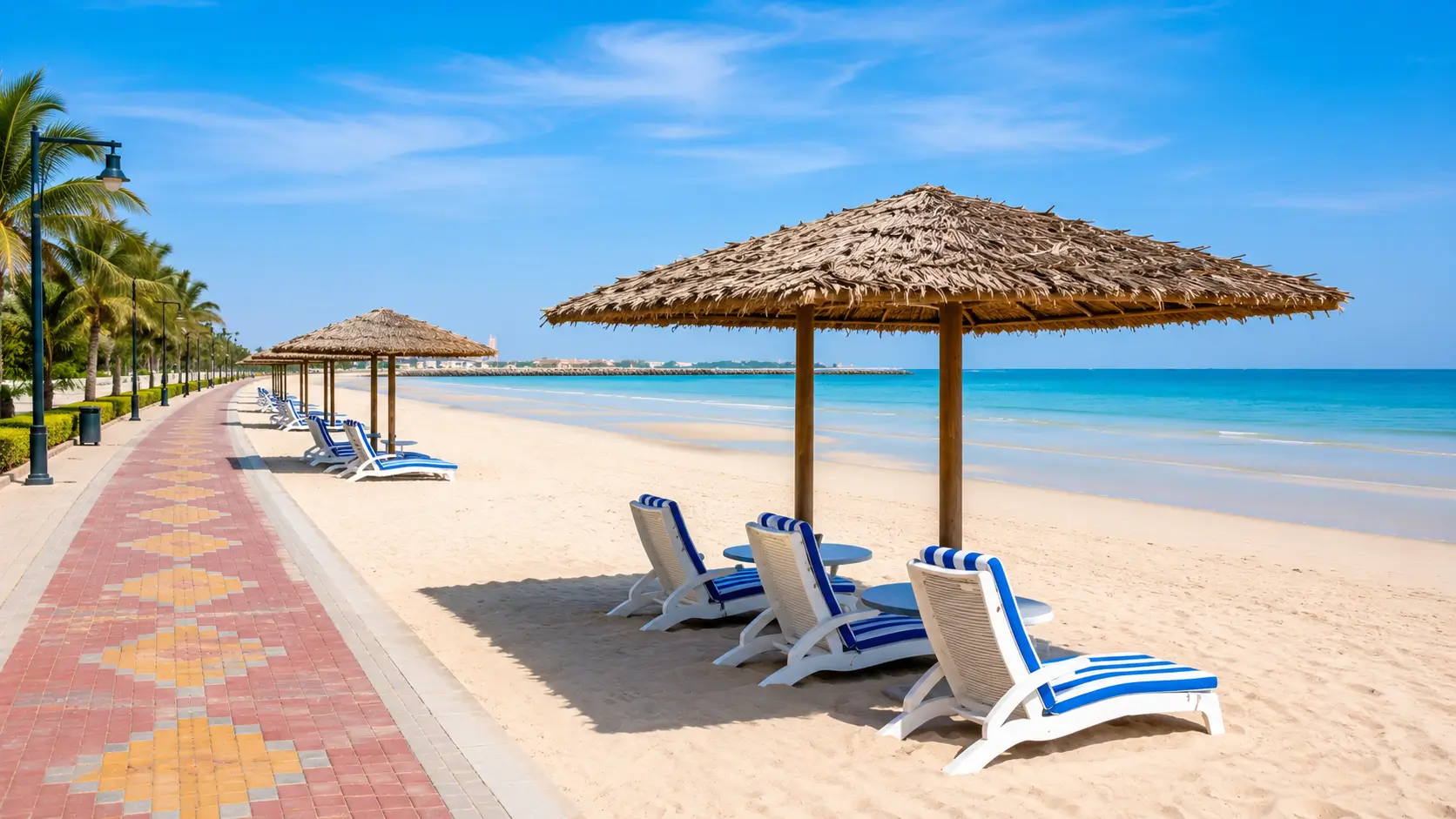
Real estate in Madinat Zayed is largely geared toward residents working in nearby industrial sectors, but with ongoing regional development, the city is also attracting long-term investors interested in community growth, rental income, and stability. While not a speculative hotspot, the steady demand of the area offers long-term investment stability, particularly for public sector employees and energy sector professionals.
This is not a market where short-term capital gains are likely. Rental demand exists but is driven by employer-assigned housing and the energy workforce, meaning vacancy risk rises during oil sector downturns. The 2015 to 2019 experience, when Abu Dhabi residential prices dropped roughly 25% to 35% from peak to trough during the oil price collapse and took four to five years to fully recover, is a relevant historical reference for anyone considering buying in this region.
The investment case is more conventional. These neighborhoods benefit from the overall market tightening of Abu Dhabi. Occupied residential units grew by 6.6% between 2022 and 2025, while supply grew by only 2.8% over the same period, a tightening market that supports both rental performance and price resilience.
The rental yields in mid-tier Abu Dhabi communities are generally in the 6 to 8% range, and city neighborhoods of Al Dhafrah likely fall within this band, though specific published yield data for Al Dhafrah 1 and 2 is limited compared to more heavily tracked areas like Al Reem or Al Reef.
Abu Dhabi's freehold property market is more restricted than Dubai's. Foreign nationals can buy freehold property only in designated investment zones: Yas Island, Saadiyat Island, Al Reem Island, Al Raha Beach, and similar ones. The city neighborhoods of Al Dhafrah and especially the Western Region townships are generally not designated as freehold zones for foreign buyers. Emirati nationals and GCC citizens face fewer restrictions.
Before purchasing in any Al Dhafrah sub-area, buyers should confirm the land classification with the Abu Dhabi Real Estate Centre (ADREC) or an expert licensed agency, such as Fine Home Real Estate. This is a step that should not be skipped.
Is Al Dhafrah a good place to live in Abu Dhabi?
It depends entirely on your situation. Energy sector professionals and budget-conscious families see it as helpful and broad. But those prioritizing lifestyle, international schools, or walkability will likely find Khalifa City, Al Raha Beach, or Al Reem Island a better fit.
What are the average rental prices in Al Dhafrah?
In Madinat Zayed, studios start around AED 18,000 annually, rising to AED 130,000 for three-bedroom apartments. In Al Dhafrah 1 and 2 within Abu Dhabi City, studio apartments begin near AED 45,000 per year.
Can foreign nationals buy property in Al Dhafrah, Abu Dhabi?
Most of Al Dhafrah falls outside the designated freehold zones of Abu Dhabi for foreign buyers. Before purchasing, confirm the land classification of the plot with ADREC or a licensed agent. Foreign ownership is generally restricted to designated investment areas like Yas Island or Al Reem Island.
 Park
Park Restaurant
 School
 Hospital
 Mall
Mall Cinema
Unlock an Exclusive Deal!